
Canada–U.S. Trade | Procurement | Construction | Manufacturing
The $500,000 Millwork Question
A 50% tariff does not mean your project costs 50% more. Here’s where the money actually moves.

If you only read 30 seconds
September 8, 2026
Effective date of Canada's counter-tariffs, 12:01 a.m.[2]
$27.6B
Value of covered U.S. imports, matching the U.S. measure.[2]
15 / 25 / 50%
The three surtax levels across 648 listed tariff items.[1]
50%
Certain U.S.-origin plywood / veneered-panel classifications.[1]
25%
Certain U.S.-origin sawn coniferous lumber classifications.[1]
25%
Certain U.S.-origin hardware and fittings classifications.[1]
Up to 50%
Certain U.S.-origin aluminum classifications.[1]
Origin + classification
Both must be confirmed before any of the above applies to a purchase.[11]
A 50% tariff on an input does not mean a 50% increase on the finished project.
The real exposure depends on country of origin, HS classification, the share of the bill of materials affected, procurement timing, supplier pricing, freight, FX and contract terms.
The $500,000 question
Take a $500,000 commercial millwork package. The number that decides tariff exposure is not the contract value. It is the narrow slice of that contract that is imported, U.S.-origin, and classified under a tariff item that appears on Canada’s September 8, 2026 schedule.[1]
The tariff applies only to qualifying imported goods. It does not apply to labour, engineering, installation, Canadian-origin materials, non-listed tariff items, or the contract value as a whole.
The proportions below are deliberately unquantified. They vary materially by project, by specification and by vendor base, and the only way to size them is with your own bill of materials and country-of-origin data.
Contract value ≠ tariff exposure
Information currency
The tariff lives in the BOM — not the contract
A millwork package is a bill of materials, not a commodity. Every line has its own country of origin and its own HS classification, and tariff treatment is decided at that level. Three questions decide each line.
Sheet goods / substrate
Verify origin
MDF and particleboard prefixes were not found on the schedule at time of access
Plywood / veneered panel
Verify origin
Certain U.S.-origin HS 4412 classifications listed at 50%
Sawn coniferous lumber
Verify origin
Certain U.S.-origin HS 4407 classifications listed at 25%
Decorative laminate
Verify origin
HS 3921 prefix not found on the schedule at time of access
Edgebanding
Verify origin
Classification depends on material; confirm the specific item
Hinges
Verify origin
Certain U.S.-origin HS 8302.10 classifications listed at 25%
Drawer slides / fittings
Verify origin
Certain U.S.-origin HS 8302.4 classifications listed at 25%
Fasteners
Verify origin
Certain U.S.-origin HS 7318 classifications listed at 50%
Aluminum trim / profiles
Verify origin
Certain U.S.-origin aluminum classifications listed at up to 50%
Metal sub-frame / fabrication
Verify origin
Certain U.S.-origin HS 7308 / 7326 classifications listed at 50%
Countertop / solid surface
Verify origin
Treatment depends on the specific product classification
Integrated lighting
Verify origin
Certain U.S.-origin HS 9405 classifications listed at 50%
Refrigerated display unit
Verify origin
Certain U.S.-origin HS 8418.50.10 classifications listed at 50%
Coatings and adhesives
Verify origin
Paint, varnish and prepared-adhesive prefixes were not found on the schedule at time of access
Read this before pricing any line above
“Made in Canada” does not necessarily mean every component in the supply chain is Canadian-origin.
The 90-day gap: where a good bid can get hurt
A project is often priced months before its materials are actually purchased. That gap — tender to procurement — is where a well-built bid can quietly come apart, with or without a tariff.
During that period any of the following can change:
- supplier quotations may expire
- country of origin may change
- specifications may change
- approved equals may require review
- lead times may move
- tariff treatment may change
- freight and FX may change
None of these automatically increase cost. The point is narrower: estimate-to- procurement timing is a commercial risk that has to be understood at buyout, not discovered at release.
Supplier quote validity
30 days
Material release
Day 87
Illustrative sequencing. Actual durations vary by project and contract.
Tender
Day 0
Award
~Day 20
Shop drawings
~Day 35
Review / approval
~Day 60
Procurement
~Day 87
Production
~Day 100
Installation
Later
The tariff may not be the biggest risk. The timing gap may be.
Follow the money
A surtax is charged once, at import, on qualifying goods. What happens after that is commercial behaviour, not tariff law — and it is where most of the confusion on live projects comes from.
01
U.S. producer
Producer pricing may or may not move
02
Importer of record
Surtax, if the item is listed and the goods are U.S.-origin
03
Distributor
May absorb, pass through, or reprice a catalogue for unrelated reasons
04
Manufacturer
Purchasing timing, inventory position, freight and FX
05
General contractor
Markup, contingency and change entitlement under the contract
06
Owner / developer
Final cost position and schedule consequences
Not every stage adds cost, and a quoted increase is not evidence of a tariff. A supplier may hold pre-tariff inventory, absorb part of a surtax, re-source, or reprice for reasons unrelated to trade policy. Statistics Canada’s building construction price indexes are the appropriate reference for what is actually happening to input costs over time.[7]
Direct tariff exposure is the surtax on qualifying imported goods. Indirect market effects — substitution demand, freight, FX, capacity — are real but behave differently and should be tracked separately in an estimate.
What actually changed
On August 22, 2026, the United States applied an additional 50% tariff to approximately C$27.6 billion of Canadian goods under Section 338 of the Tariff Act of 1930, administered through HTSUS subheadings 9903.03.12 to 9903.03.16.[4]
Canada announced a matching response three days later. On September 8, 2026, at 12:01 a.m., Canadian counter-tariffs of 15%, 25% and 50% take effect on a matching C$27.6 billion of imports from the United States.[2]
The measures are applied line by line against specific tariff items — not to categories, industries or finished packages. That is the whole reason a millwork buyer’s exposure has to be read at the BOM level.
Figure — Schedule by rate band
The 648 tariff items on Canada’s schedule effective September 8, 2026, counted directly from the published list.[1]
March 13, 2025
Canada's first steel and aluminum counter-tariffs take effect
Canada applies a 25% surtax across a long schedule of U.S. iron, steel and aluminum tariff items. Those effective dates are still printed against each line on the current Finance Canada schedule.[3]
October 14, 2025
U.S. Section 232 measures on timber, lumber and derivatives come into force
A 10% tariff on softwood timber and lumber, 25% on upholstered wooden furniture, and 25% on kitchen cabinets and vanities entering the United States. These are U.S. import measures — they affect Canadian millwork exporters selling south, not Canadian buyers.[5]
December 31, 2025
Scheduled U.S. rate increases deferred
A presidential proclamation pushes the programmed increases on upholstered furniture and cabinetry out to January 1, 2027, holding those rates at 25% through 2026.[6]
August 22, 2026
United States applies a 50% tariff to C$27.6 billion of Canadian goods
Imposed under Section 338 of the Tariff Act of 1930 and administered through HTSUS subheadings 9903.03.12 through 9903.03.16, effective 12:01 a.m. EST for entries on or after that date.[4]
August 25, 2026
Canada announces a matching response
The Department of Finance confirms Canada will match the U.S. measures dollar for dollar and rate for rate, covering $27.6 billion of imports from the United States, alongside a support package for affected workers and businesses.[2]
September 8, 2026
Canadian counter-tariffs take effect at 12:01 a.m.
648 tariff items at 15%, 25% and 50%, concentrated in steel and aluminum, dairy, appliances, agricultural equipment, pulp and paper, plastics and electronics. Existing steel and aluminum counter-tariffs step up from 25% to 50% to match the U.S. rate.[1]
Two entries are routinely conflated. The October 2025 Section 232 timber and lumber measures are U.S. import tariffs affecting Canadian goods sold south.[5] They are a different question from what a Canadian buyer pays for a Canadian-manufactured package.
The tariff tables
Read against the schedule, the coverage is overwhelmingly metals. Chapters 72, 73 and 76 account for 303 of the 648 listed items. Chapter 44 — wood — contributes 20, most of them plywood and veneered panels.[1]
The takeaway for a casework BOM: the hardware and metal content is where listed classifications cluster, and the panel content is narrower than most people assume.
Full line-item detail is below, grouped by material family. Open the group you are actually buying.
Figure — Where coverage sits
Listed tariff items by HS chapter, limited to chapters relevant to commercial interiors.[1]
Wood & panel products7 items
Chapter 44 appears on the schedule, but narrowly. Plywood and veneered panels are captured at the top rate. Several sheet goods that a casework shop consumes in volume are not on the published list at all.
| HS item | Description | Surtax |
|---|---|---|
| 4412 (all subheadings listed) | Plywood, veneered panels and similar laminated wood, including LVL, blockboard and laminboard | 50% |
| 4407.11 – 4407.19 | Coniferous sawn lumber — pine, fir and spruce, S-P-F, Hem-fir, other | 25% |
| 4402.90 | Wood charcoal | 50% |
| 4410 | Particle board, OSB and similar board | Not on the schedule |
| 4411 | Fibreboard — MDF, HDF and similar | Not on the schedule |
| 4418 | Builders' joinery and carpentry of wood | Not on the schedule |
| 4421 | Other articles of wood | Not on the schedule |
MDF and particleboard — the substrates under most commercial casework — do not appear on the September 8 schedule. That is a material distinction, and it is the reason blanket statements about "tariffs on panel products" are wrong.
Metals & hardware9 items
This is the deepest area of coverage. Chapters 72, 73 and 76 together account for 303 of the 648 listed tariff items, and functional cabinet hardware is captured under Chapter 83.
| HS item | Description | Surtax |
|---|---|---|
| 8302.10 | Hinges, of base metal | 25% |
| 8302.41.10 / 8302.42 / 8302.49 | Mountings and fittings for buildings, for furniture, and other — the heading that covers drawer slides and similar hardware | 25% |
| 7318.11 – 7318.29 | Screws, bolts, nuts, washers and similar fasteners of iron or steel | 50% |
| 7308.10 – 7308.90 | Structures and parts of structures, of iron or steel | 50% |
| 7326 | Other articles of iron or steel | 50% |
| 7601 / 7604 / 7606 / 7608 | Unwrought aluminum, bars, rods, profiles, plate, sheet, strip, tube | 50% |
| 7610.10 / 7610.90 | Aluminum structures — doors, windows, frames, thresholds and other | 50% |
| 7616.10 | Aluminum nails, screws, bolts and similar articles | 50% |
| 7615.10 / 7615.20 | Aluminum table, kitchen and sanitary ware | 25% |
Hardware and metal sub-components are typically a single-digit to low-double-digit share of a millwork contract value. A 25% or 50% surtax on that share is not a 25% or 50% increase to the package.
Finishing, adhesives & decorative surfaces6 items
The materials most people assume are tariffed are, in several cases, absent from the schedule. Adjacent building products are present.
| HS item | Description | Surtax |
|---|---|---|
| 3208 / 3209 | Paints and varnishes, including waterborne coatings | Not on the schedule |
| 3506 | Prepared glues and adhesives | Not on the schedule |
| 3921 | Other plates, sheets and film of plastics — the family that includes decorative laminate substrates | Not on the schedule |
| 6809.11 | Boards, sheets, panels and tiles of plaster — gypsum board | 50% |
| 9405.11 / 9405.42 / 9405.99 | Ceiling and wall luminaires, other electric luminaires, and parts | 50% |
| 3918.10 | Floor, wall and ceiling coverings of polymers of vinyl chloride | 50% |
Integrated lighting inside a millwork assembly is frequently a supplied-and-installed line in a Division 6 package. On the September 8 schedule it sits at the top rate, while the coating sprayed onto the same casework does not appear at all.
Equipment, appliances & replacement parts6 items
Relevant to retail, grocery and QSR fit-outs, where equipment is often bought inside or alongside the millwork package, and to the plant that manufactures it.
| HS item | Description | Surtax |
|---|---|---|
| 8418.50.10 | Refrigerated display counters, showcases and similar refrigerated furniture | 50% |
| 8418.10 / 8418.21 / 8418.29 / 8418.30 / 8418.40 | Refrigerators and freezers, household and commercial types as listed | 25% |
| 8422.90 | Parts of dish washing machines | 25% |
| 8415 (listed subheadings) | Air conditioning machines and certain parts | 15% and 25% |
| 8205.59 | Other hand tools | 50% |
| 8207.20 / 8207.30 | Dies for drawing or extruding metal; tools for pressing, stamping or punching | 15% |
Refrigerated display casework at 50% is one of the sharpest exposures on this list for grocery and food-service rollouts. It is also one of the most commonly specified by brand standard rather than by performance — which is what makes it hard to substitute late.
Furniture, packaging & logistics6 items
Loose furniture and the packaging that protects finished casework in transit both appear.
| HS item | Description | Surtax |
|---|---|---|
| 9403.40 | Wooden furniture of a kind used in the kitchen | 25% |
| 9403.60.90 | Other wooden furniture, other than for domestic purposes | 50% |
| 9403.20 | Other metal furniture | 50% |
| 9403.91 | Parts of furniture, of wood | 25% |
| 9401.61 | Upholstered seats with wooden frames | 25% |
| 4819.10 | Cartons, boxes and cases of corrugated paper or paperboard | 50% |
Note the split inside a single heading: wooden kitchen furniture sits at 25% while other non-domestic wooden furniture sits at 50%. Classification, not category, decides the rate.
Language matters when you quote this
Where you sit changes what you should watch
Owner / developer
- Contingency
- Opening dates
- Substitution decisions
GC / project manager
- Approvals
- RFIs
- Change entitlement
- Procurement schedule
Estimator
- Quote validity
- Exclusions
- Origin assumptions
Purchasing
- Country of origin
- HS classification
- Supplier alternatives
- Lead times
Architect / designer
- Approved equals
- Performance
- Visual intent
- Timely review
Manufacturer
- BOM exposure
- Margin
- Purchasing timing
Installer / trade contractor
- Schedule compression
- Late material release
- Coordination risk
Retail, grocery and QSR rollouts deserve a specific note: brand standards frequently name equipment by model. Certain U.S.-origin refrigerated display counter classifications are listed at 50%, and certain other refrigerator and freezer classifications at 25%.[1] On a multi-site programme, changing that standard is a prototype and approval decision, not a site-level one.
The specification problem
Supply-chain volatility turns small specification issues into schedule issues. A named product with no workable approved-equal path removes the project’s ability to react when origin, lead time or availability moves.
The pressure points are familiar: approved equals, finish matching, performance requirements, proprietary specifications, brand standards, consultant approval, warranty implications, lead time and origin.
Nothing here suggests substituting outside the contract. The argument is about sequencing: an alternate reviewed inside the normal submittal process is a manageable event. The same alternate raised after production release is a rework decision with drawing, approval and warranty consequences.
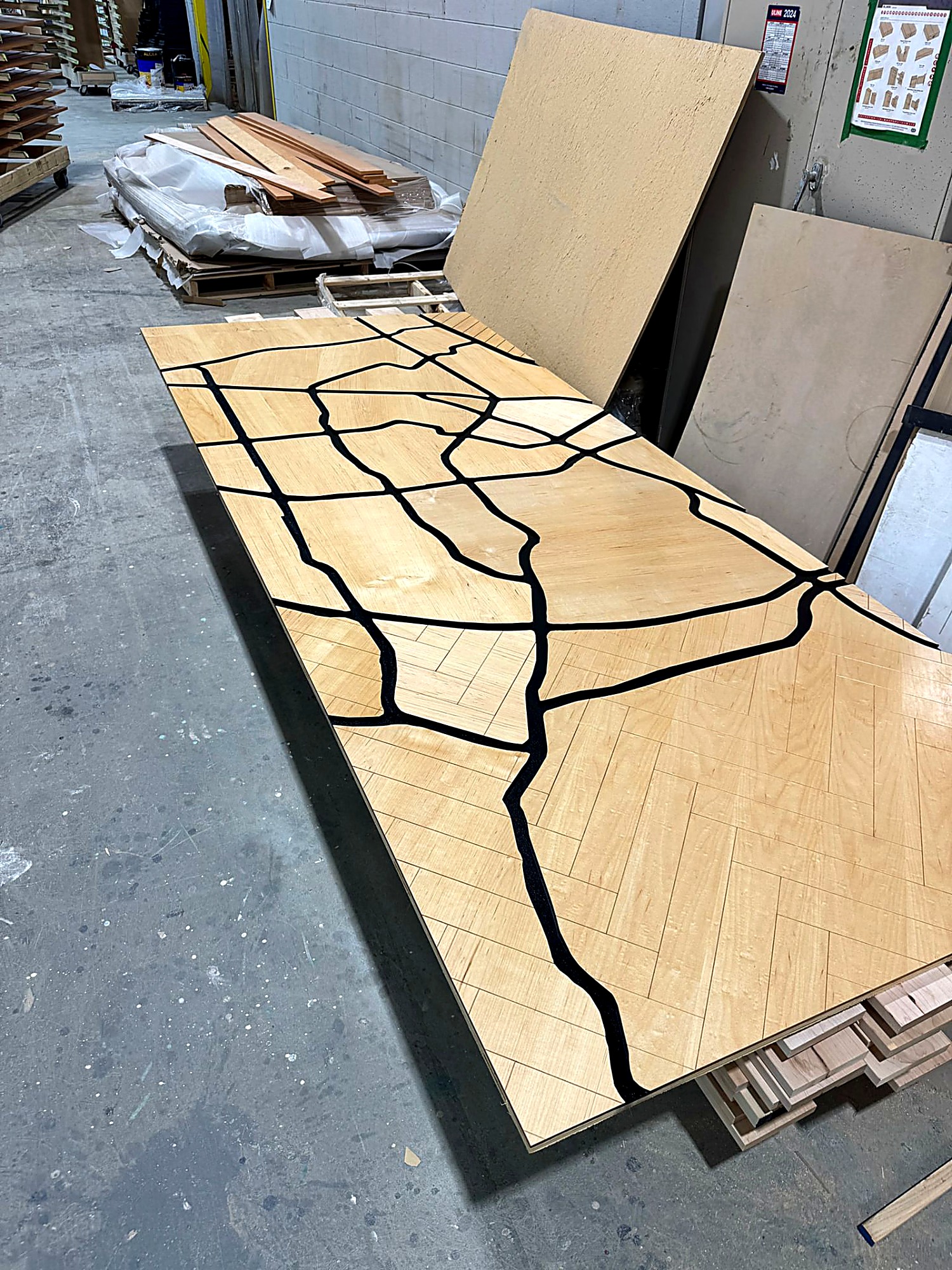
An equal reviewed early is easier to manage than the same substitution after production release.
Canadian manufacturing is not automatically tariff-free
It would be convenient for a Canadian manufacturer to argue that domestic production makes tariffs someone else’s problem. It does not.
Where domestic capacity helps
- Manufacturing labour, engineering and assembly are not import transactions
- Fewer border crossings in the supply chain for a given component
- Domestic and third-country alternatives can be qualified without ocean lead times
- In-house engineering allows an approved alternate to be re-detailed quickly
- Inventory and pre-buy decisions can be made against a known production schedule
Where it does not
- Functional hardware is commonly imported; certain classifications are listed at 25%
- Machinery, tooling and replacement parts appear across Chapter 84 at up to 50%
- Certain U.S.-origin plywood and veneered-panel classifications are listed at 50%
- Supplier pass-through is a commercial decision and may differ from the surtax
- Availability, not price, can become the constraint if several buyers re-source at once
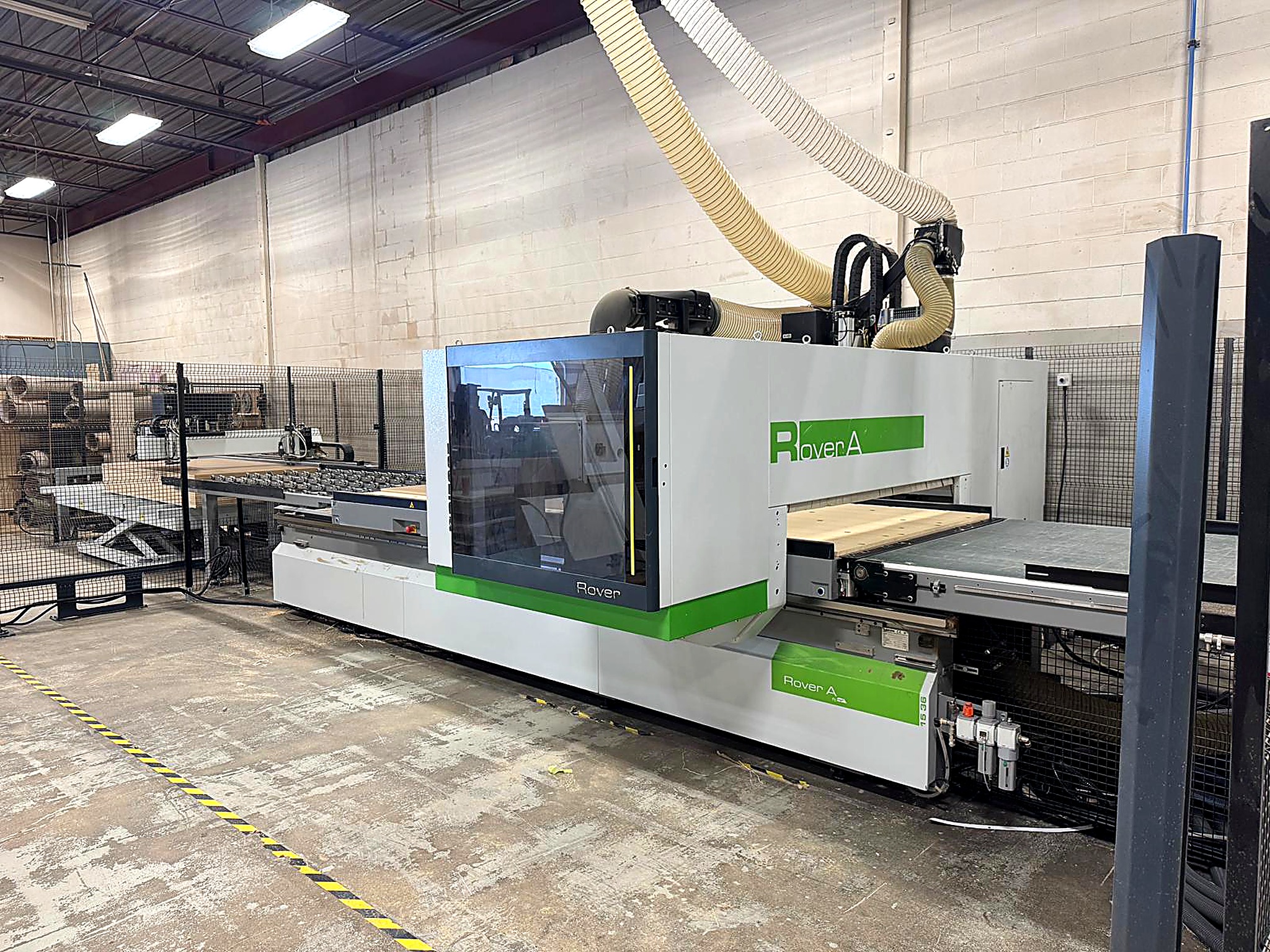
Domestic manufacturing changes the shape of the exposure. It converts a broad, uncontrolled import risk into a narrower, identifiable list of purchased components. That is a materially better position to manage from. It is not immunity.
Origin is not routing
A product manufactured elsewhere and transhipped through a U.S. warehouse is treated according to its origin under the Customs Tariff — but the documentation has to support that.[11]
CUSMA is a separate question
CUSMA governs preferential duty rates. Whether a surtax order applies is a distinct question. Do not assume a certification neutralises either side’s measure; verify it for the specific tariff item.[12]
President's perspective
Editorial commentary — Chamkaur Sandha, President
The headline tariff rate is not the first number I watch. I watch the time between estimate and procurement.
We may price a project today, spend weeks in shop drawing review, and release materials much later. In that window supplier pricing, specifications, origin, lead times and availability can all move. That is where a trade issue becomes a construction issue.
If the bill of materials is understood early, the project team has options: qualify a second vendor, review an alternate inside the normal submittal cycle, or make a deliberate call on buying early.
If the exposure is found after release, nobody has options. Everyone is reacting, and the cost of the delay is often larger than the surtax that triggered it.
Know the bill of materials, know the origins, verify the classifications with people qualified to do it, and give the design team runway to review an equal before it becomes urgent.
5 questions to take into your next project meeting
- 01
Which specified materials are actually U.S.-origin?
- 02
Which of those items fall under listed HS classifications?
- 03
When do our supplier quotations expire?
- 04
Which acceptable alternates can be reviewed before procurement becomes urgent?
- 05
Who carries escalation risk under the contract?
Those five answers may tell you more about your project exposure than the headline tariff rate.
Disclaimer
Sources & methodology
Every tariff rate, effective date and item count in this article was taken from the Department of Finance Canada schedule or from the government notices listed below. Coverage was determined by searching the published September 8, 2026 table for the relevant HS prefixes; where a prefix returned no rows, the article states that the item was not found on that schedule rather than asserting exemption. No figures were modelled, estimated or extrapolated. The $500,000 funnel and the 90-day timeline are labelled illustrative and are analysis, not confirmed fact. Secondary legal and trade commentary was used for context only.[9][10]
- [1]
Complete list of U.S. products subject to counter tariffs (effective September 8, 2026)
Department of Finance Canada · August 2026, page current at time of access
https://www.canada.ca/en/department-finance/programs/international-trade-finance-policy/canadas-response-us-tariffs/complete-list-us-products-subject-to-counter-tariffs.htmlAccessed September 3, 2026
- [2]
Canada announces targeted countermeasures and substantive support for workers and businesses in response to U.S. tariffs
Department of Finance Canada · August 25, 2026
https://www.canada.ca/en/department-finance/news/2026/08/canada-announces-targeted-countermeasures-and-substantive-support-for-workers-and-businesses-in-response-to-us-tariffs.htmlAccessed September 3, 2026
- [3]
List of products from the United States subject to counter-tariffs effective September 8, 2026 (backgrounder)
Department of Finance Canada · August 25, 2026
https://www.canada.ca/en/department-finance/news/2026/08/list-of-products-from-the-united-states-subject-to-counter-tariffs-effective-september-8-2026.htmlAccessed September 3, 2026
- [4]
CSMS #69606660 — Guidance: Section 338 Additional Duties on Certain Goods of Canada
U.S. Customs and Border Protection · August 21, 2026
https://content.govdelivery.com/accounts/USDHSCBP/bulletins/4261d04Accessed September 3, 2026
- [5]
Softwood lumber — recent developments
Global Affairs Canada · Continuously updated; entries dated October 14, 2025 through June 30, 2026
https://www.international.gc.ca/controls-controles/softwood-bois_oeuvre/recent.aspx?lang=engAccessed September 3, 2026
- [6]
Adjusting Imports of Timber, Lumber and Their Derivative Products Into the United States (proclamation amending Proc. 10976)
Federal Register / The White House · Signed December 31, 2025; published January 9, 2026
https://www.federalregister.gov/documents/full_text/html/2026/01/09/2026-00327.htmlAccessed September 3, 2026
- [7]
Building construction price indexes, second quarter 2026
Statistics Canada · July 24, 2026
https://www150.statcan.gc.ca/n1/daily-quotidien/260724/dq260724b-eng.htmAccessed September 3, 2026
- [8]
Canadian international merchandise trade, June 2026
Statistics Canada · August 4, 2026
https://www150.statcan.gc.ca/n1/daily-quotidien/260804/dq260804a-eng.pdfAccessed September 3, 2026
- [9]
Canada Imposes Counter-Tariffs on C$27.6-Billion of U.S. Imports, Effective September 8, 2026
Blake, Cassels & Graydon LLP · August 27, 2026
https://www.blakes.com/insights/canada-imposes-counter-tariffs-on-27-6-billion-of-u-s-imports-effective-september-8-2026/Accessed September 3, 2026
- [10]
Ottawa unveils calibrated retaliatory tariffs: What Canadian businesses need to know
Gowling WLG · August 26, 2026, updated August 27, 2026
https://gowlingwlg.com/en-ca/insights-resources/articles/2026/ottawa-calibrated-retaliatory-tariffsAccessed September 3, 2026
- [11]
Canada's Customs Tariff and tariff classification guidance
Canada Border Services Agency · Current schedule
https://www.cbsa-asfc.gc.ca/trade-commerce/tariff-tarif/menu-eng.htmlAccessed September 3, 2026
- [12]
Understanding CUSMA compliance
Trade Commissioner Service, Government of Canada · Current page
https://www.tradecommissioner.gc.ca/en/market-industry-info/search-country-region/country/canada-united-states-export/us-tariffs/understanding-cusma-compliance.htmlAccessed September 3, 2026
Image credits
Sandha Industry Briefing
Prepared by Chamkaur Sandha
President, Sandha Woodworks. Leads manufacturing, procurement and delivery of commercial architectural millwork across Canada.
All Industry Insights