
Inside the WMCO Plant Tour at Sandha Woodworks
Two Brantford manufacturers opened their doors to industry peers. The conversations ranged from AI-assisted estimating and CNC automation to the daily work of managing labour, materials and production bottlenecks.
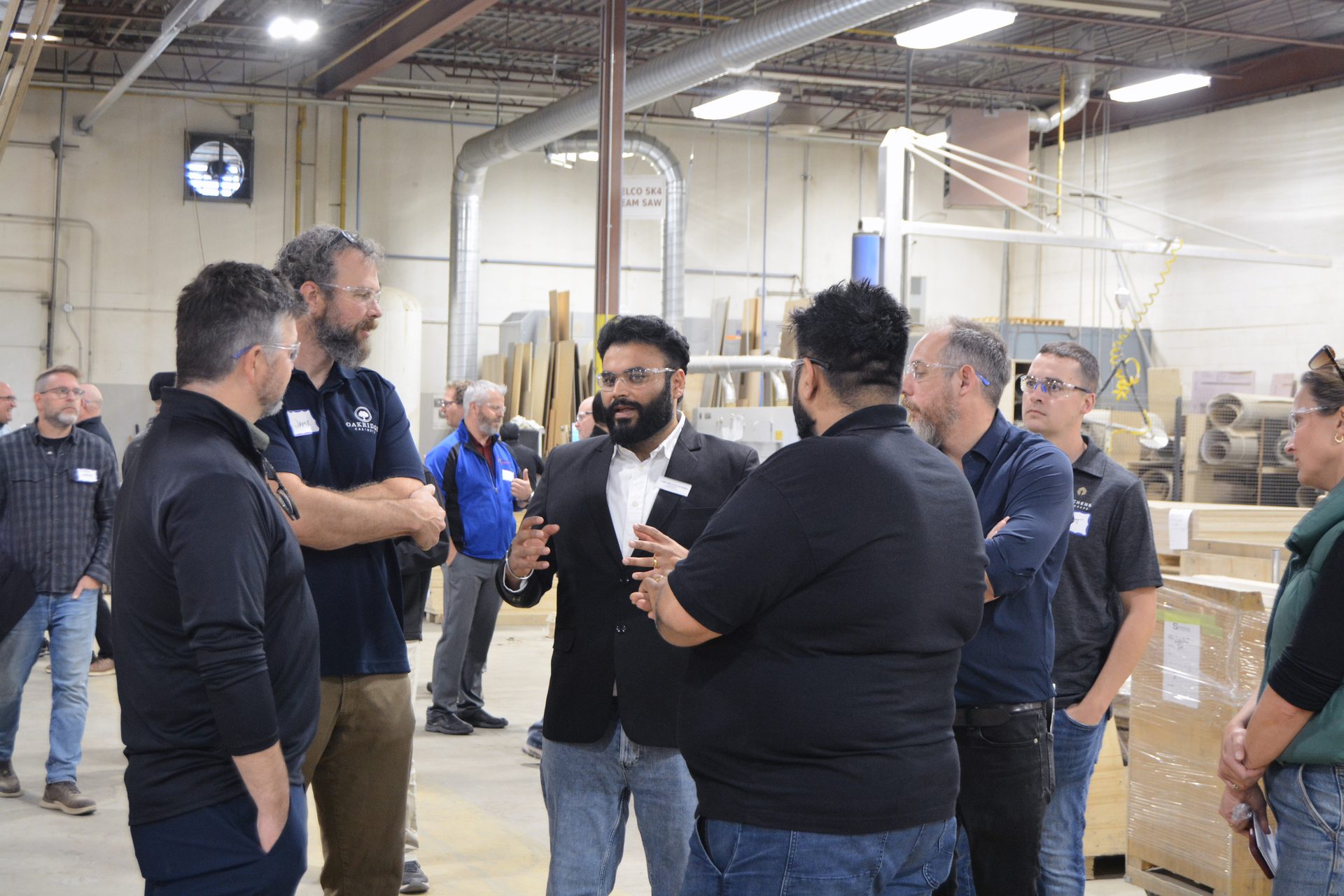
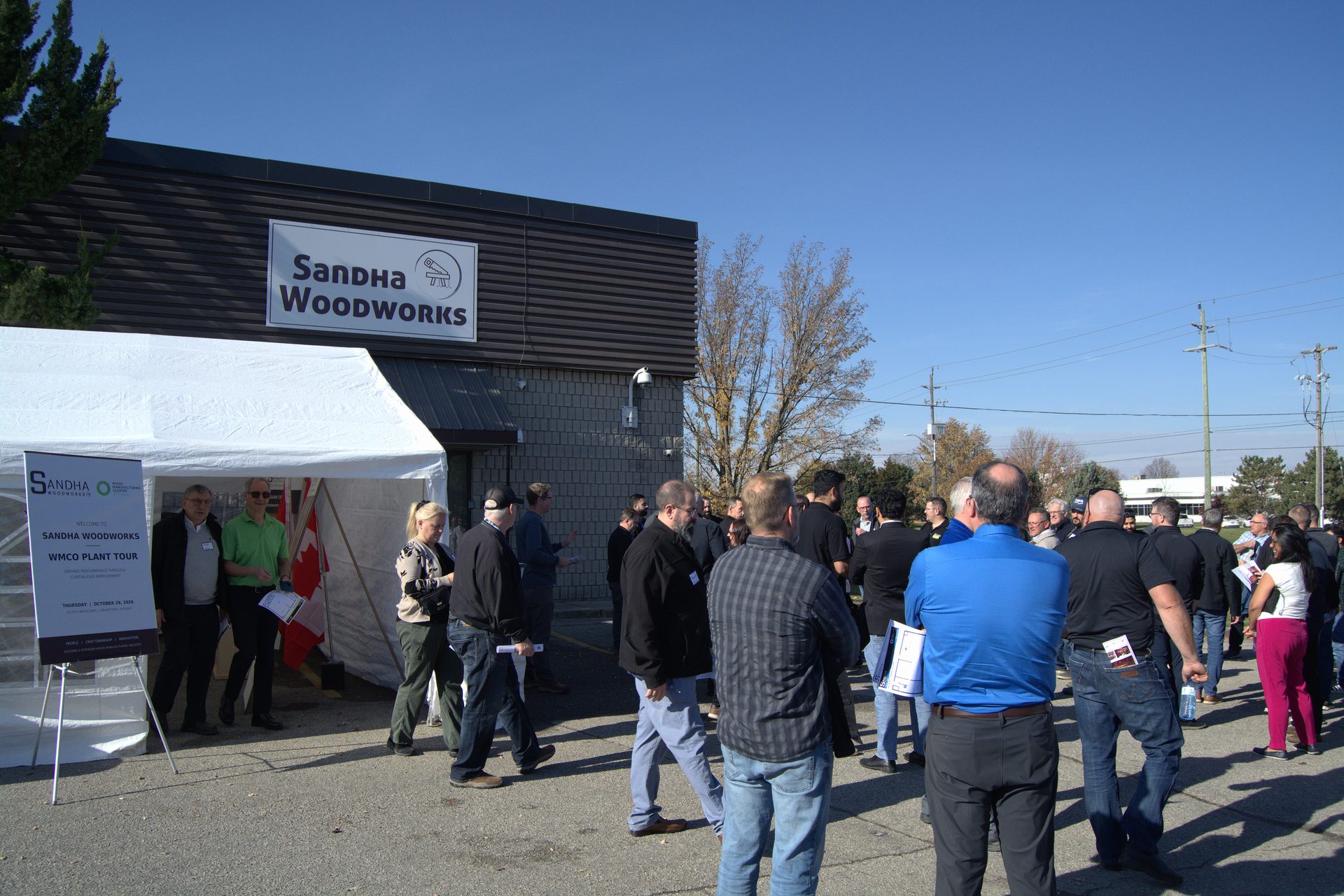
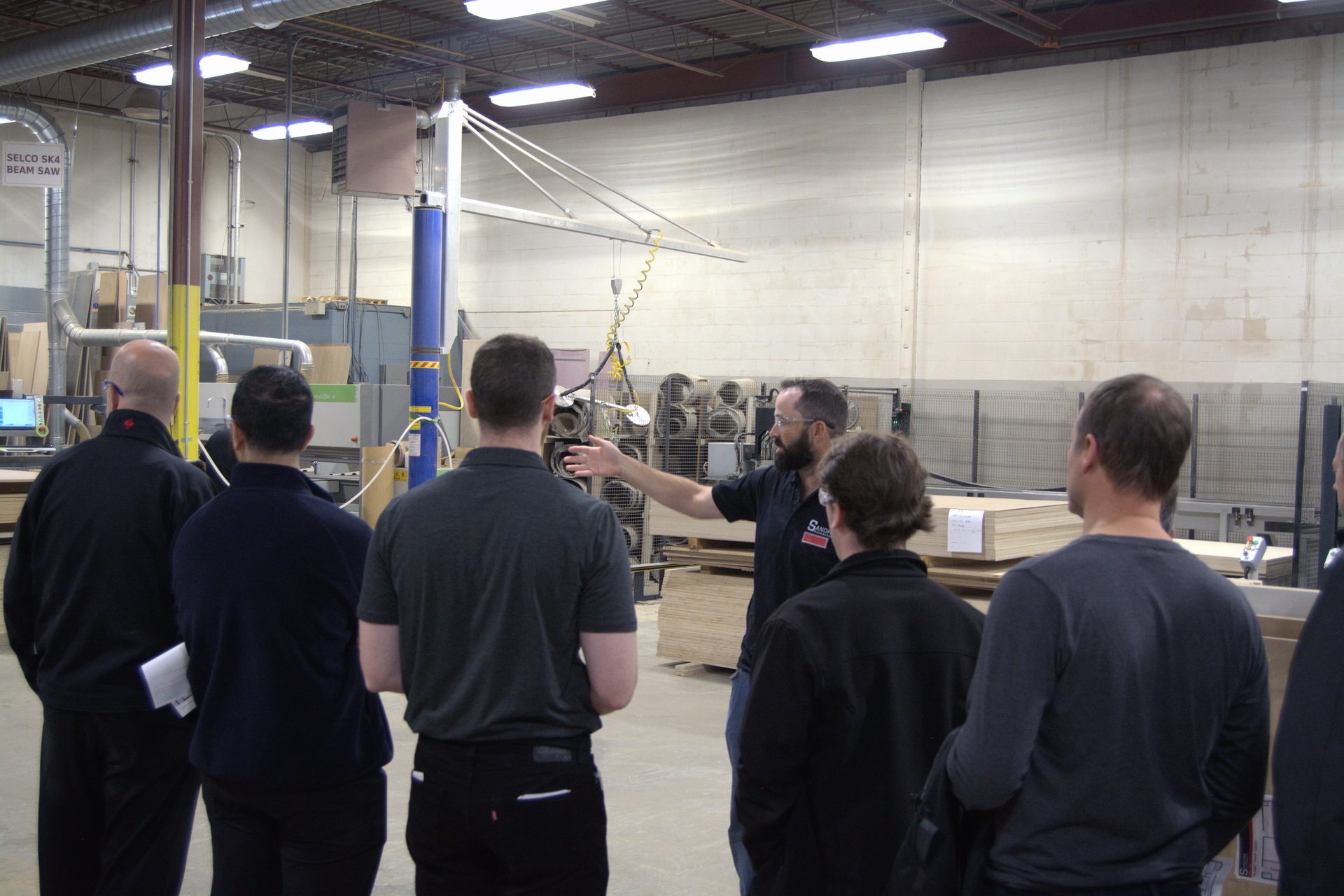
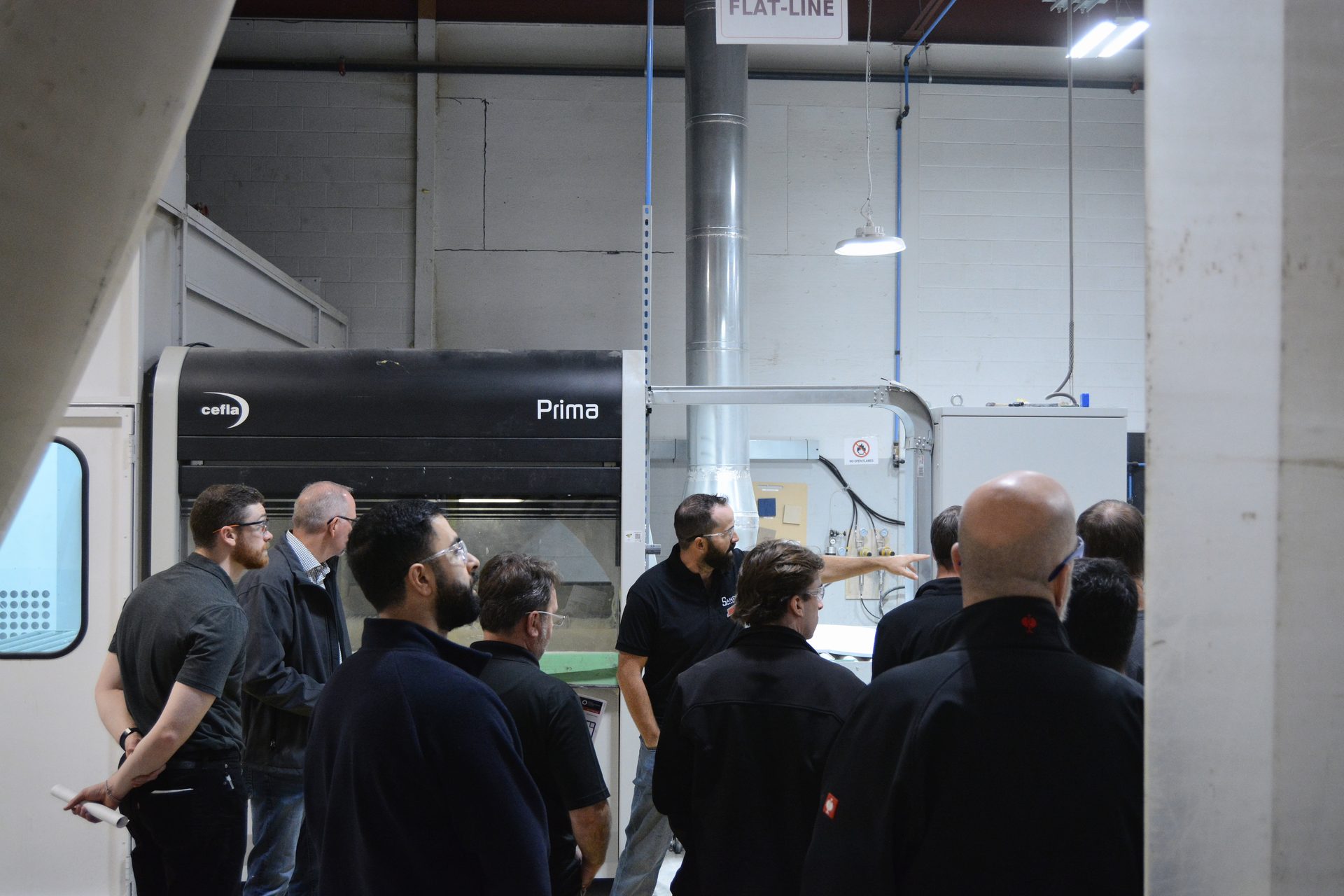
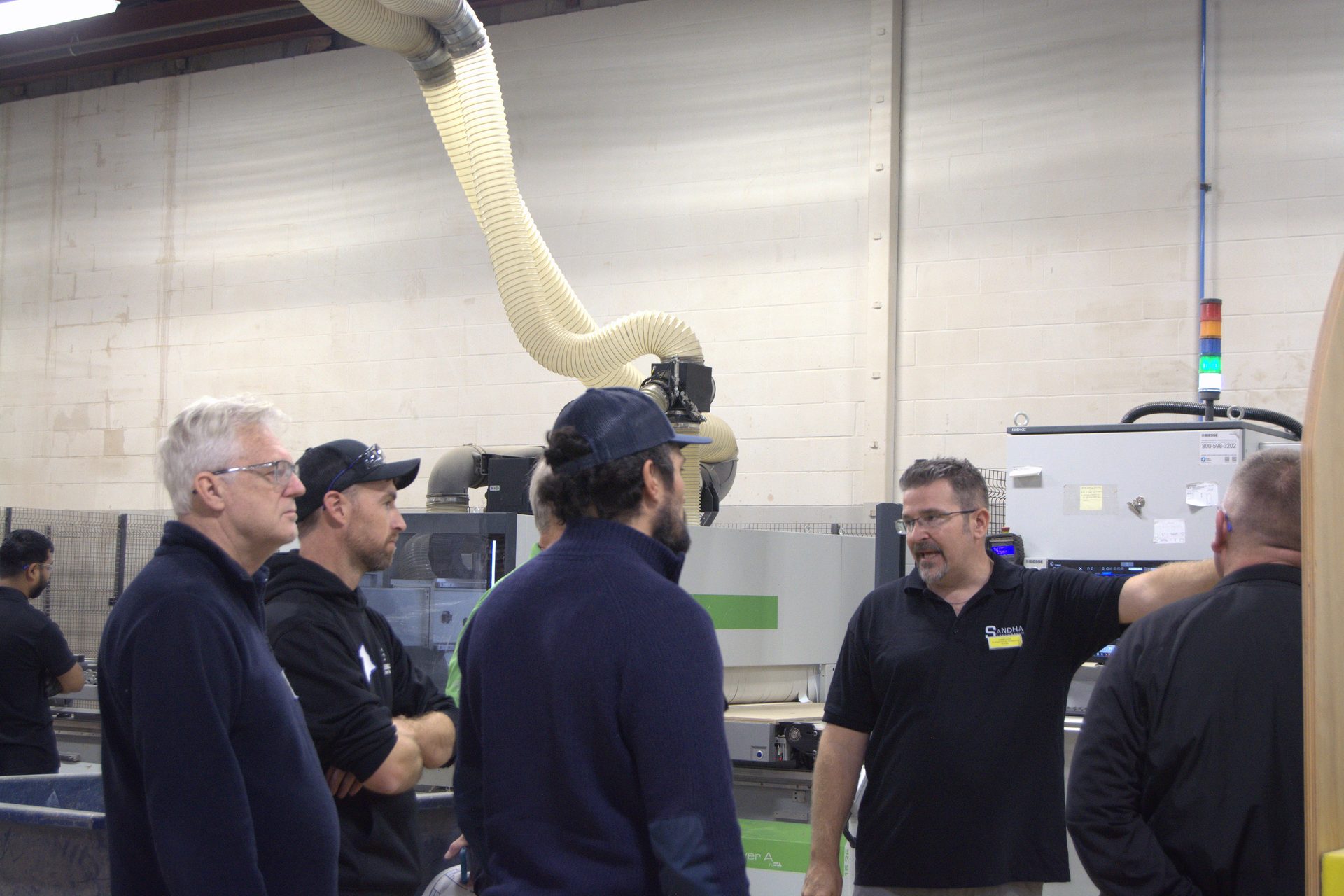
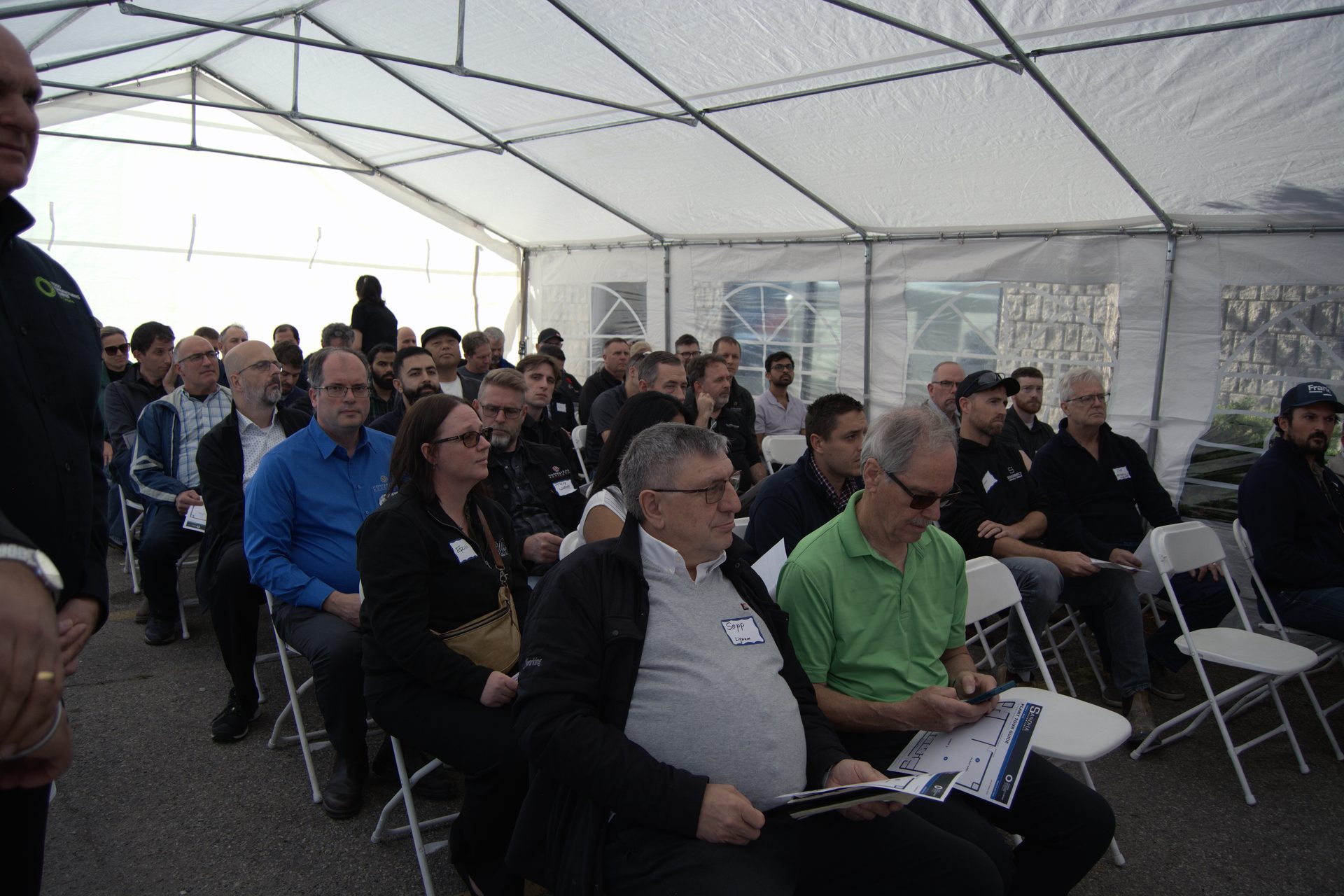
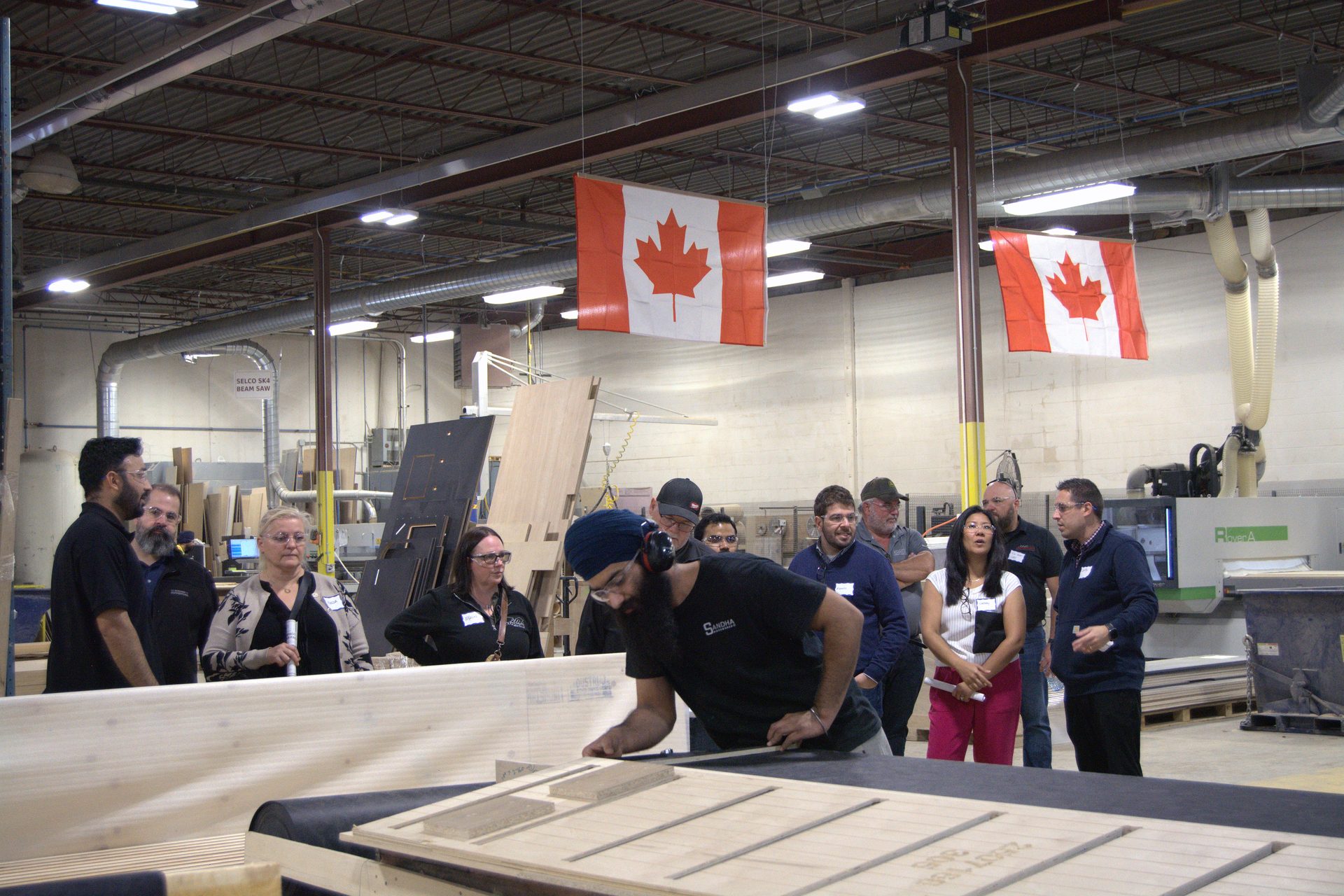
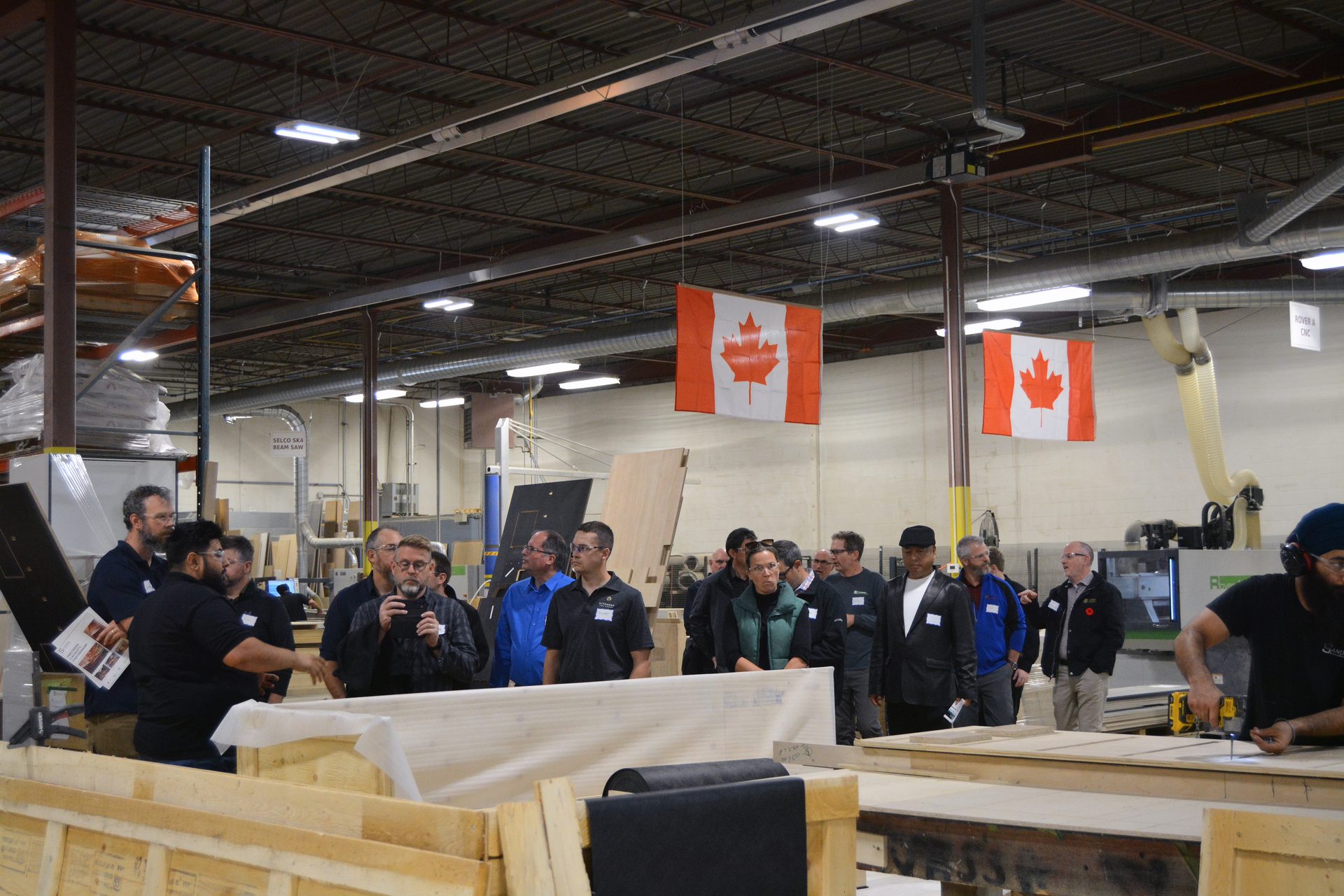
On October 29, 2026, more than 40 people came to Brantford for a joint plant tour organized by the Wood Manufacturing Cluster of Ontario (WMCO). The morning began at Precision Veneer Products and continued at Sandha Woodworks, where visitors split into four groups to see our architectural millwork operations, CNC equipment and in-house Cefla flatline finishing system.
The equipment drew people onto the floor. The conversations were about what it takes to make that equipment productive. How do you catch a scope gap before an estimate becomes a purchase order? What happens when machining is ready but hardware has yet to arrive? Where can AI save time, and where does the work still need the judgement of an estimator, engineer or experienced operator?
Those questions connect the tour to the pressures facing Ontario wood manufacturers. A shop can improve how it quotes, machines or finishes a part. The result only reaches the customer when the work flows through all three.
Two shops, two ways of looking at production
Precision Veneer opened the day with a look at its veneer and door operations. At Sandha Woodworks, we shared a different production environment, where a commercial millwork package might combine repeatable casework, custom assemblies, multiple finishes and hardware that needs to arrive in time for assembly. Seeing both operations in one morning gave visitors a chance to compare how manufacturers organize their work around different products and customer requirements.
That comparison also worked both ways. We shared our process with other manufacturers and heard how they think about their own bottlenecks, staffing and use of equipment. A method developed for repeat production can help a custom shop where several projects use the same cabinet construction. A custom shop’s approach to identifying exceptions can be equally useful to a manufacturer trying to keep an unusual order from interrupting a regular run.
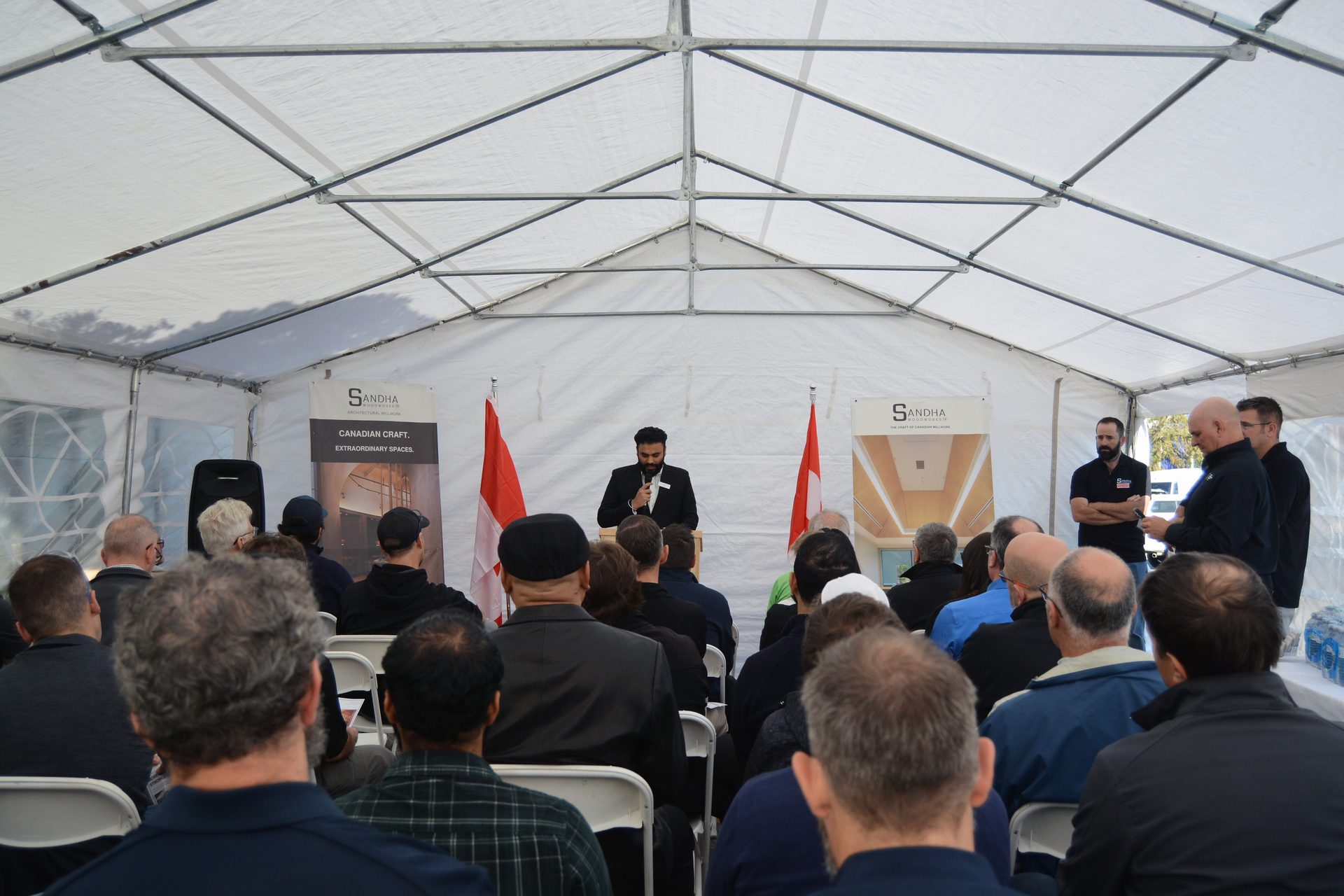
WMCO also discussed its work supporting AI adoption in the industry. That set up a practical question for the day. Which tasks are worth improving first, and how do you make sure the information stays reliable as it passes from one team to another?
Where AI could help from estimating to production
Estimating is a good place to start because the work involves a lot of comparison. A single bid package can include architectural drawings, specifications, finish schedules, addenda and information from suppliers. An AI assistant could create a first-pass scope checklist, identify sheets or clauses worth reviewing, and flag references that appear to conflict. An estimator could then verify what changed, which items belong in the price and what needs to be clarified with the client.
Take a retail fixture package as an example. A drawing may show cabinet elevations, while a separate schedule lists finish codes and an addendum changes the hardware. An assistant could assemble those references in one place. The estimator still needs to confirm quantities, labour, supplier prices and exclusions against the current documents. If the source is incomplete, that is a question to raise before the quote goes out.
The same approach can help later in the job. At handover, it can pull together estimate assumptions, accepted alternates and outstanding decisions. In engineering, it can compare revision notes with the latest drawing package. In production planning, it can flag jobs approaching release that still have an open approval, a missing component or a capacity conflict. These are opportunities to test on controlled workflows with reliable source data.
| Stage | Where AI could assist | Who verifies the result |
|---|---|---|
| Estimating | Compare drawings, specifications and addenda. Draft a scope checklist and flag possible omissions. | The estimator verifies scope, quantities, pricing and exclusions. |
| Project handover | Assemble approved scope, commitments, open questions and long-lead items. | The project manager confirms the handover against the contract and records who owns each item. |
| Engineering | Summarize revision differences and surface discrepancies across schedules, drawings and material lists. | Engineering checks the approved revision and controls production release. |
| Production planning | Flag incomplete job kits, sequencing conflicts and orders approaching their required release date. | The planner verifies shop capacity, material status and actual priorities. |
| Quality | Group recurring defect notes by part family or process so the team can see patterns. | Quality and production staff examine the work and confirm the cause. |
A first trial could be as narrow as reviewing addenda on repeat fixture bids. Ask the assistant to cite the source drawing or clause for each change it flags. Have estimators compare the output with their normal review and track both time spent and errors caught. That gives the shop a basis for deciding whether the tool helps before expanding it to higher-consequence work. Engineering approval, machine programming and production release remain with the people responsible for those decisions.
What CNC automation asks of the rest of the shop
CNC equipment can make machining more repeatable and allow the shop to process families of parts from engineered data. The floor tour gave visitors a look at that work in context. Before a cut starts, the operator needs the right material, a released program and a way to identify each part. After machining, the parts need to reach the right order, assembly area or finishing batch.
A faster machining cycle can create a queue elsewhere. If parts leave the CNC faster than they can be sorted, edgebanded or assembled, the next shift may spend time looking for components and moving carts. If an obsolete revision reaches the machine, repeatability can multiply the error. Good labels, a clear release procedure and a place for completed parts affect how much usable output the shop gets from automation.
This is where a production discussion gets more useful than a list of machine specifications. The question is how many complete, verified sets can advance to the next operation on time. That measure accounts for both the capability of the equipment and the work around it.
What visitors saw at the Cefla flatline
One of the tour stops at Sandha Woodworks was our in-house Cefla flatline finishing system. It gave visitors a view of how an automated finishing process fits into commercial millwork production, particularly for suitable panels and repeat runs where consistency across parts matters.
The coating pass is one part of the sequence. Preparation affects what comes out of the line. Parts must be clean and ready for the specified finish. The team needs to plan the batch around colour, sheen, part geometry and handling. After application, drying or curing, inspection and protection all affect when the pieces can move to the next operation. A large run can still be held up by a missing approved sample, a colour change or limited space to stage finished parts.
That is also why different work can call for different finishing routes. A repeat run of suitable panels may lend itself to the flatline. An assembled piece, a specialty profile or a finish with additional detail may need more manual handling. Planning those routes early helps the shop match the finish to the specification and coordinate the work before pieces reach the finishing area.
Making lean manufacturing practical
The discussions about lean manufacturing centred on how a shop can find and reduce the delays that accumulate between departments. A good starting point is to follow one order from release through packing. At each handoff, ask what the next team needs, when the work was ready, and why it waited.
Consider a machining area sending parts to assembly in the order they came off the machine. If assembly needs all the parts for one cabinet or one room at the same time, a cart full of mixed jobs can create sorting and extra handling. A simple improvement would be to stage completed kits by assembly sequence, mark missing components clearly and have one person own the exceptions. The team can then check whether assembly starts sooner and whether it spends less time searching for parts.
In finishing, the question might be how to group work with the same approved coating while protecting project priorities. In purchasing, it might be how to show that a material has a confirmed arrival date, instead of showing only that a purchase order was sent. Both changes make it easier to distinguish work that can move from work that needs a decision.
The right measures depend on the constraint. Queue time before finishing, time spent waiting on approvals and the share of parts that pass inspection on the first attempt can tell different stories. Track a small number of measures against one change at a time. Once the queue moves, follow the order again and see where it waits next.
Building skills when experienced people are hard to hire
Labour shortages are felt differently across a shop. One company may struggle to find a CNC operator with setup experience. Another may have enough people to staff the floor but too few experienced finishers or engineers to train new hires and resolve exceptions. A job can sit for a day because one person who knows a particular machine or process is already committed elsewhere.
Cross-training begins with knowing where that reliance exists. A shop can map which tasks each person can perform independently, which tasks they are learning and who can train them. Start with stations or decisions that regularly hold up work. Pair a trainee with an experienced operator, document the normal setup and inspection steps, and agree on what a successful handover looks like.
Technology can support that effort. Setup sheets, visual work instructions and searchable troubleshooting notes help keep knowledge available across shifts. Experienced people are still the ones who can recognize a tool showing unusual wear, a part that will be difficult to assemble, or a finish that needs another look under the light. Making time to pass on those observations builds capacity even when hiring remains difficult.
Planning around material shortages and long lead times
A delayed hinge, an unavailable laminate or a veneer that needs to match across several areas can affect an entire shipment. During a busy week, the schedule can look full even though several orders are waiting for one item or approval. Seeing those dependencies early gives purchasing, engineering and the project manager time to respond.
A practical long-lead register ties each item to the order, the required shop date, the approval status, the supplier’s confirmed delivery date and the person responsible for follow-up. It should show what is needed for production to start and what is needed for a complete kit to ship. On some jobs those are different dates. Knowing which is which can help a team decide whether to release part of the work or resequence the order.
If an alternate is needed, the shop can identify the decisions it changes. A different laminate can affect colour and texture. A different hinge can change drilling patterns, door clearances or the way a fixture is serviced. The relevant project team should approve the substitution before engineering releases affected parts. That protects the project schedule from rework that can cost more time than the initial shortage.
What we took back to the shop floor
Plant tours give manufacturers a chance to see ordinary decisions in another shop. Where are parts staged? How does an operator know which revision to run? What happens to an order while it waits for an approval? Those questions are easier to ask when the people doing the work are standing beside you.
For Sandha Woodworks, the tour brought those conversations together across estimating, engineering, purchasing and production. An AI-assisted bid review is most valuable when the findings reach the handover. CNC capacity is most valuable when the next department can use the parts. A finishing system is most valuable when the work arrives prepared and leaves ready for its next step. The advantage comes from linking those decisions across the job.
Thank you to WMCO for bringing the industry together, to Precision Veneer Products for opening the day, and to event sponsors CNC Automation and Lignum Consulting. Thank you as well to the manufacturers and industry partners who brought their questions and shared their experience, and to the Sandha Woodworks team who welcomed visitors onto the floor.
- WMCO
- Architectural Millwork
- AI in Manufacturing
- Lean Manufacturing
- CNC Automation
- Skilled Trades
- Supply Chain
- Brantford
Planning an architectural millwork package?
Send us your drawings, specifications and schedule so our estimating and engineering teams can review the scope with you.
Related reading
Continue exploring
Manufacturing
Sandha Woodworks to Welcome WMCO for Brantford Manufacturing Tour
Oct 26, 2026 · 3 min read
Manufacturing
Inside Canadian Manufacturing: A Parliamentary Visit to Sandha Woodworks
Oct 15, 2026 · 6 min read
Engineering
Architectural Millwork Is Becoming a Strategic Construction Discipline
Jun 25, 2026 · 11 min read