Overview
STEP 1 — Sanding station. Wide-belt and orbital sanding to a controlled grit schedule (typically 150 → 180 → 220 for stain grade, 220 → 320 for high-gloss). Every panel is checked for scratch pattern and edge break before it leaves the station — a bad sand is a bad finish, no top-coat can hide it.
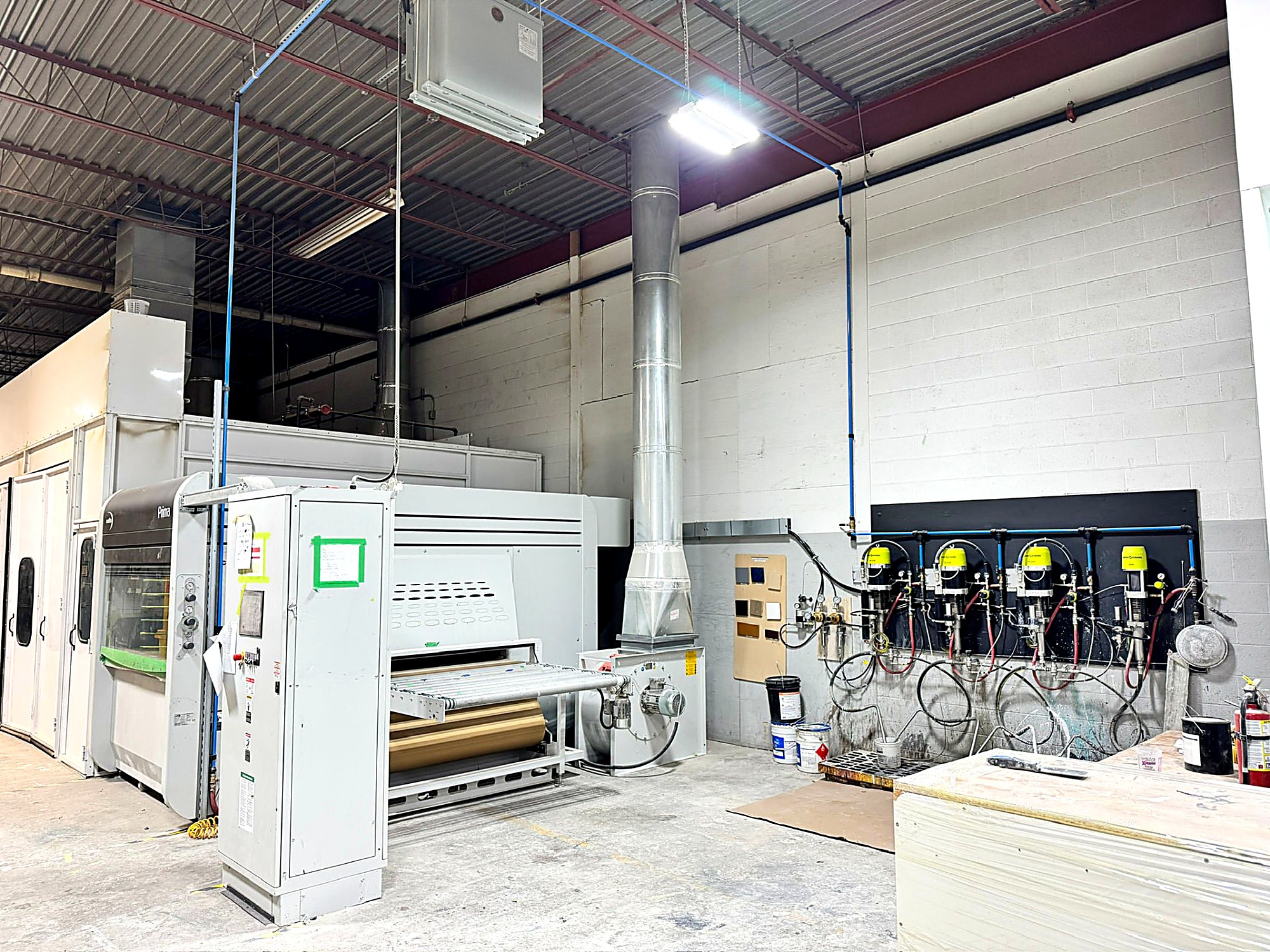
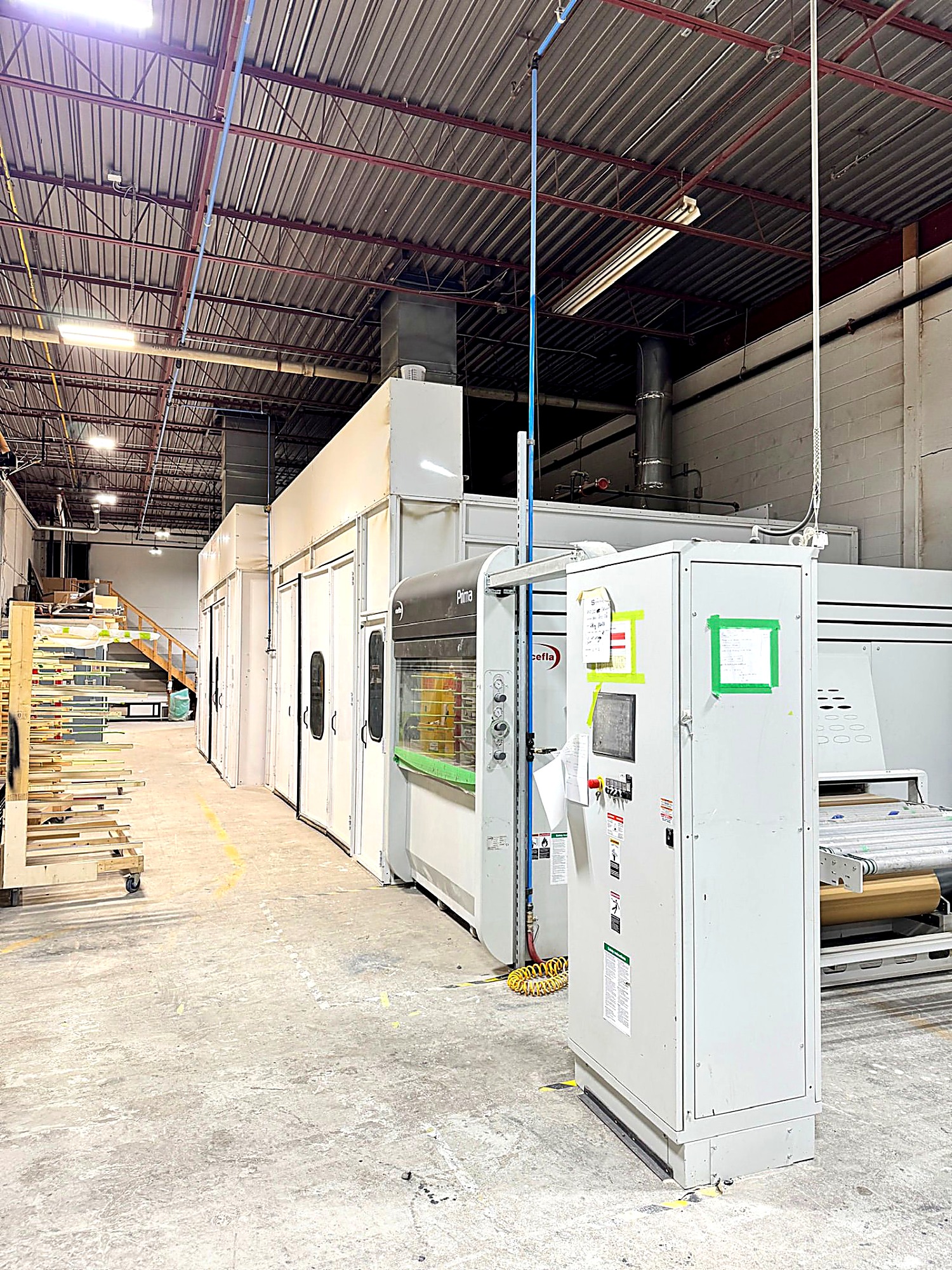
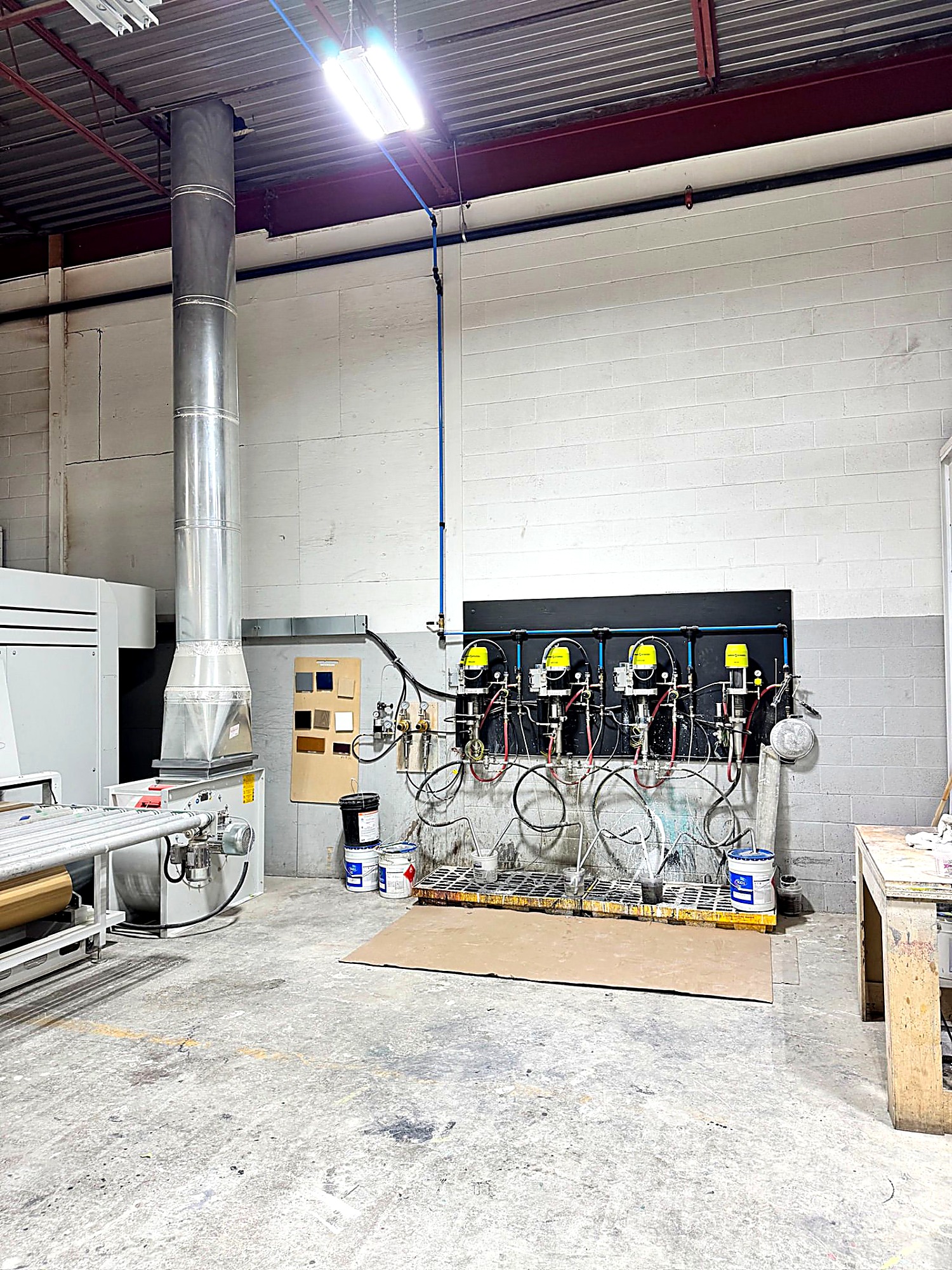
STEP 2 — Cefla automatic flatline. Flat parts (doors, drawer fronts, panel-good backs, wall-panel blanks) run through a Cefla-technology robotic flatline. Reciprocating and 6-axis spray heads apply sealer and top-coat in a controlled film-build, followed by inline UV or forced-air flash — throughput, film consistency and colour uniformity that a manual gun cannot match. Over-spray recovery is >95%, so paint waste is a fraction of manual work.
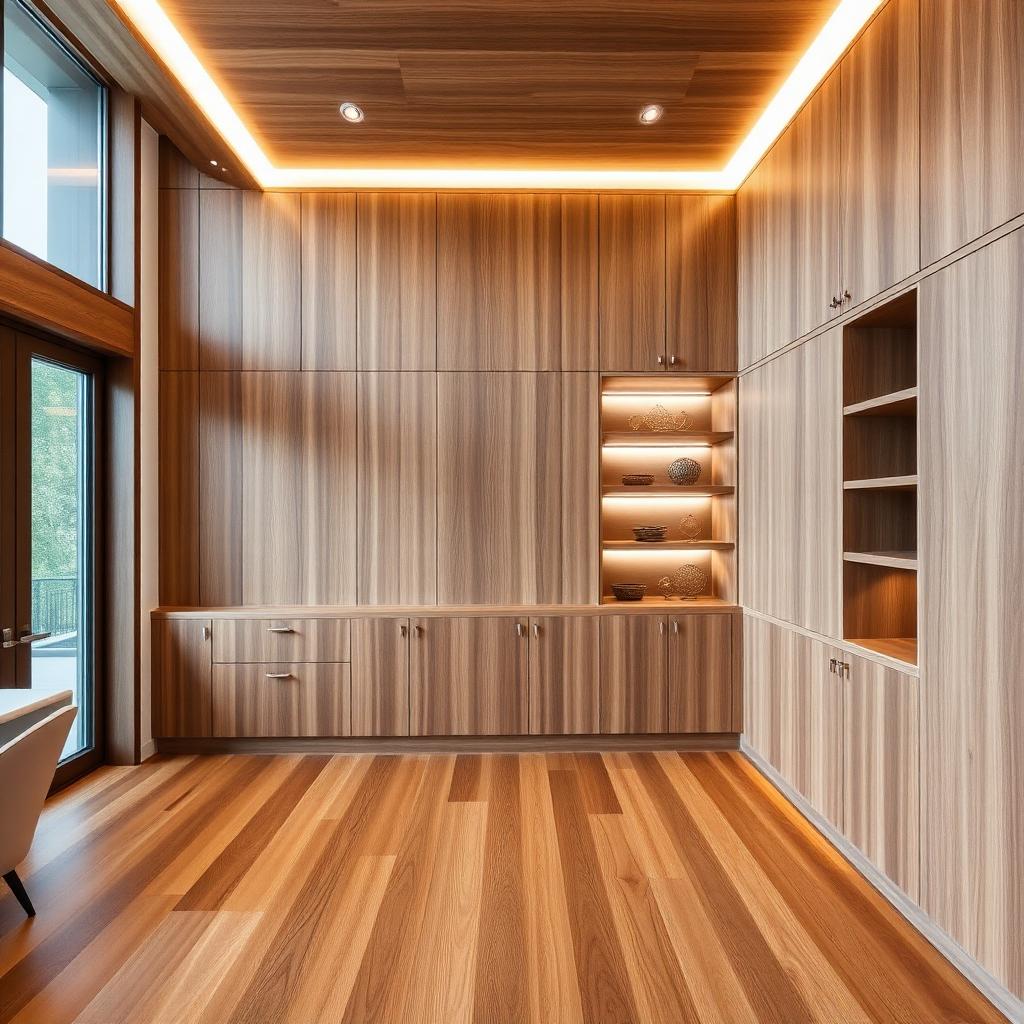
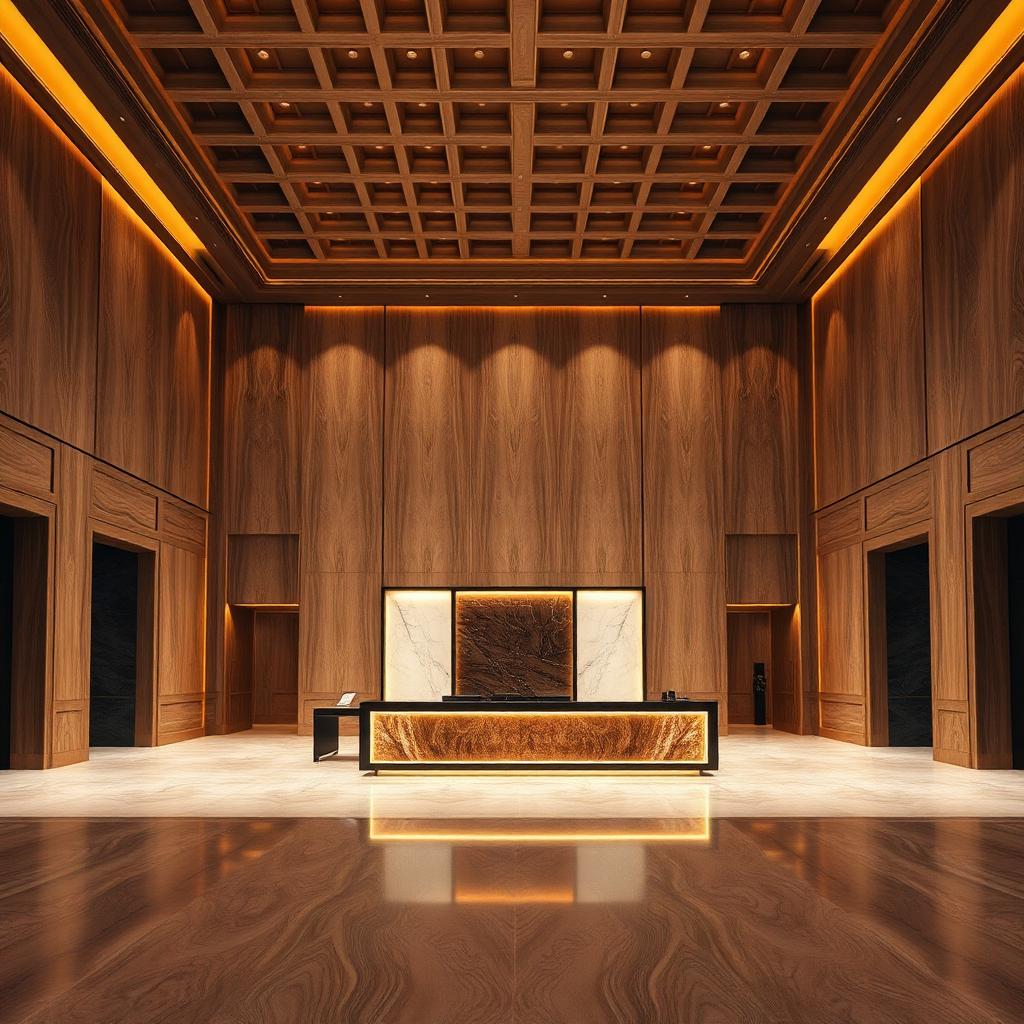
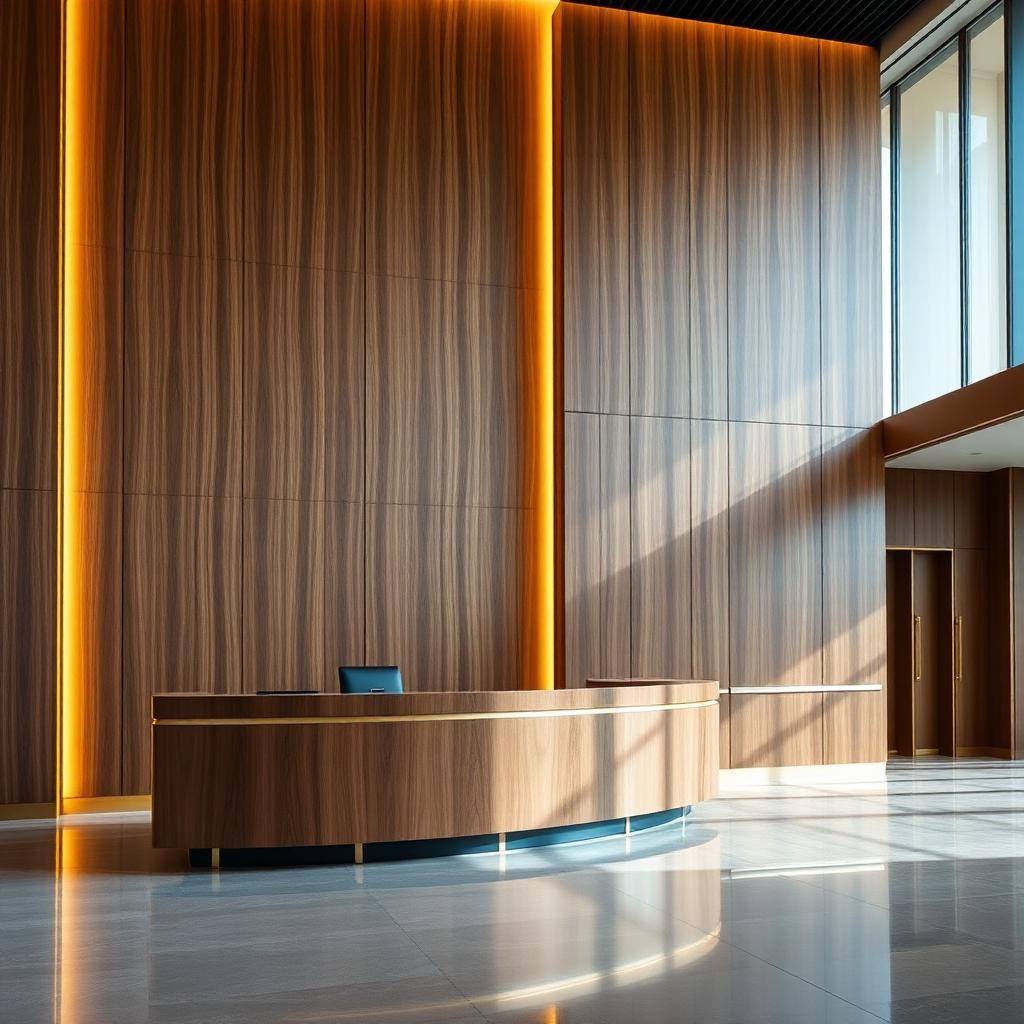
STEP 3 — Manual downdraft booths. Custom three-dimensional units — reception desks, curved bar fronts, feature walls, coffered ceiling assemblies, casework carcasses — go into full downdraft manual booths (United Spray Booths-class equipment): filtered ceiling plenum, dry-filter floor grating, HEPA make-up air, LED colour-accurate lighting. Sprayed by hand by a certified finisher wearing a fresh-air respirator.
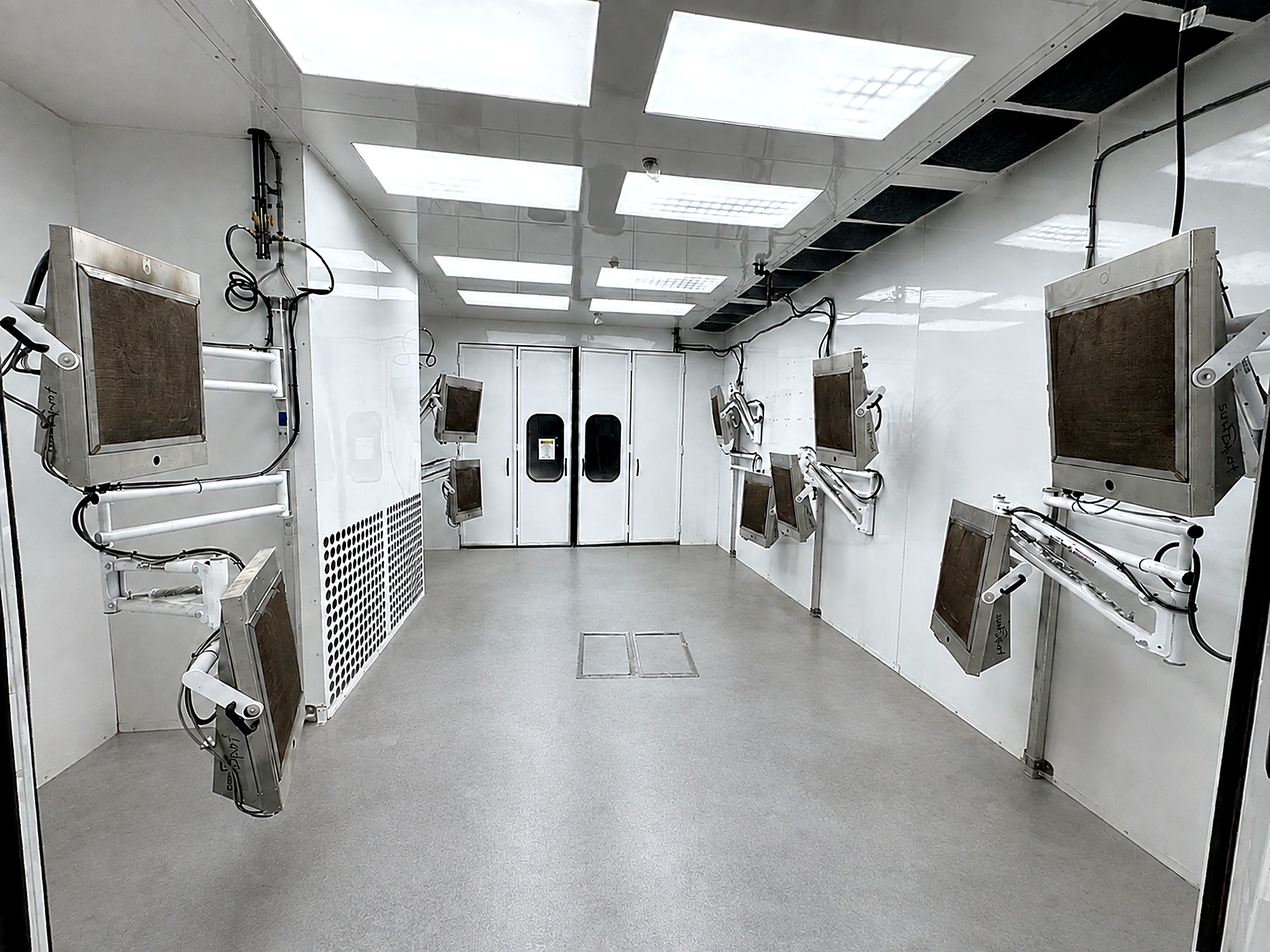
STEP 4 — Sunspot dry / cure room. Freshly coated parts move into a Sunspot-technology high-velocity heated dry room. Regulated temperature and airflow flash-off solvents and force-cure catalyzed coatings so a unit that would normally cure overnight is handleable in a fraction of the time — without skinning, orange-peel or solvent-pop. That means faster ship dates without compromising film integrity.
STEP 5 — QC and packing. Every unit is inspected under D65 daylight lamps against the signed control sample: colour, sheen (gloss meter), film build (mil gauge) and defect count. Only then does it move to the packing dock.
ENVIRONMENT & SAFETY. Dry-filter capture, carbon-abatement stacks and closed chemical storage keep VOC and particulate emissions well inside MOECC / EPA thresholds. Low-VOC waterborne and 2K catalyzed systems are the default for LEED and WELL projects. Booth make-up air is HEPA-filtered so employees breathe clean air on both sides of the gun — safety is not an afterthought, it is why we chose Italian booth technology in the first place.
SINGLE-VENDOR FINISHING. Because sanding, spraying and drying happen in one continuous line inside our own building, colour, sheen and film build are consistent across every unit in a run — a reality that a shop out-sourcing finish to a paint-jobber cannot promise.
Best for
- Stained hardwood veneer packages (executive, hospitality, civic)
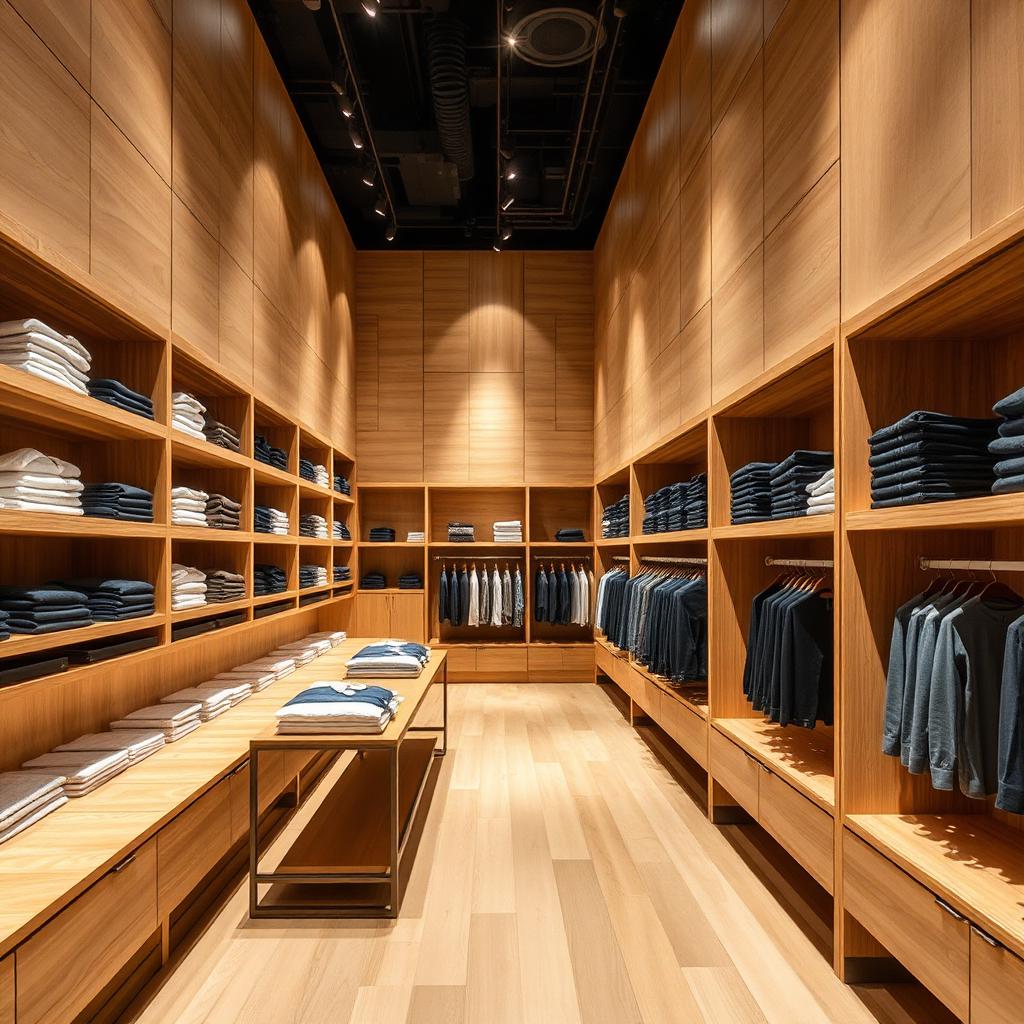
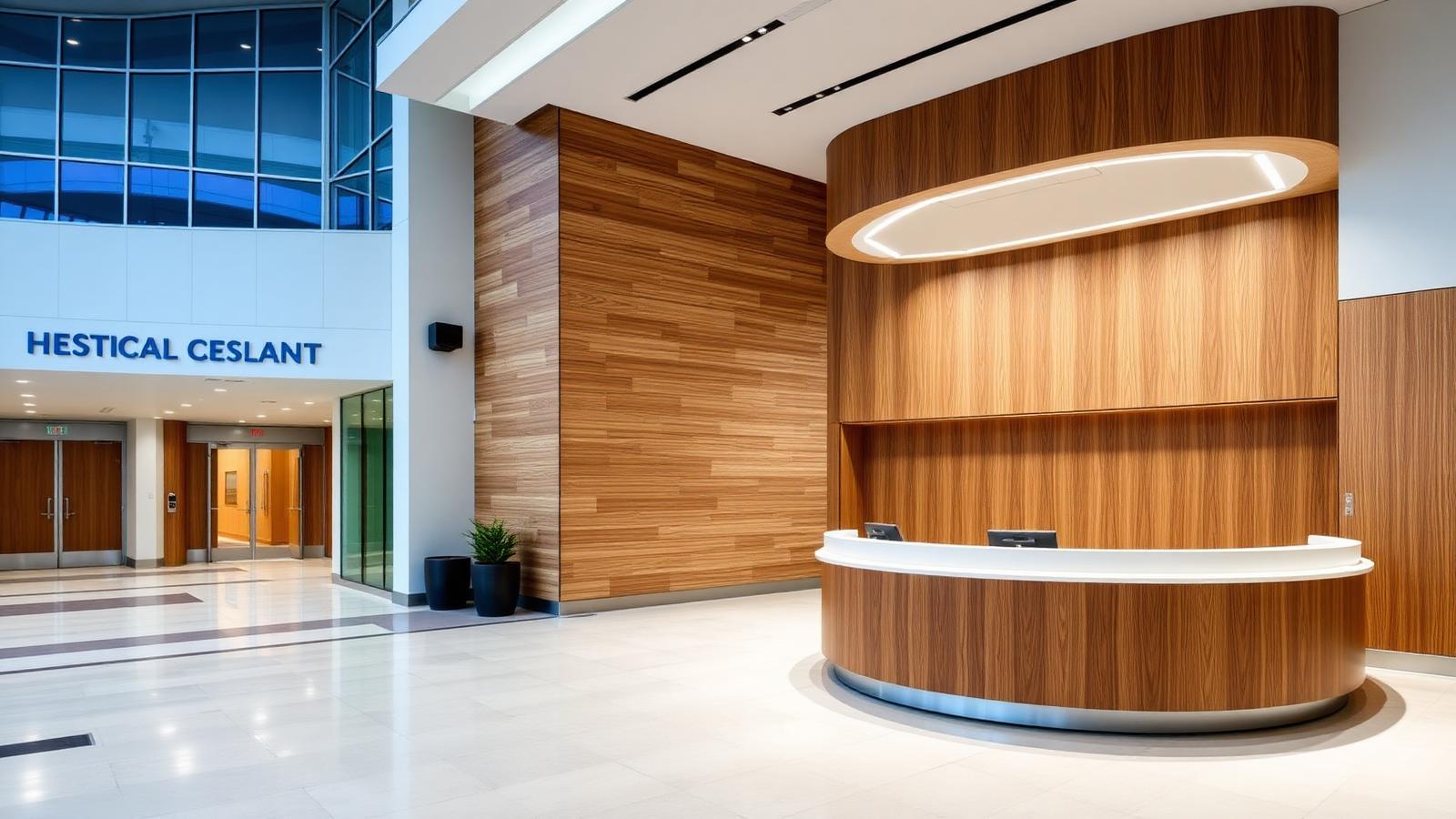
- Pigmented painted MDF casework (retail, corporate, healthcare)
- High-gloss and open-pore luxury systems (flagship hospitality)
- Chemical-resistant finishes for lab, healthcare and food-service
- LEED / WELL projects requiring low-VOC waterborne
- Brand-standard colour matching (BM, SW, RAL, Pantone, physical chip)
Standards we build to
Every service line is engineered against the same commercial code and standards framework — the two lists below are what we routinely reference on Canadian and US projects.
Canadian standards
- AWMAC North American Architectural Woodwork Standards (NAAWS 4.0) — Economy, Custom, or Premium grade
- AWMAC Guarantee & Inspection Service (GIS) — third-party inspected on request
- CAN/ULC-S102 & S102.2 — surface burning characteristics (Class A available)
- National Building Code of Canada (NBC) & Ontario Building Code (OBC) millwork provisions
- CSA B651 & AODA — accessibility for public and workplace millwork
- CAN/CSA O121, O151, O153 — Canadian plywood standards
- CGSB finish performance standards where specified
- MOECC air-emissions compliance (dry-filter + carbon abatement)
US standards
- AWI Architectural Woodwork Standards (equivalent grading to NAAWS 4.0)
- ANSI/BHMA A156 series — commercial cabinet hardware grades 1/2/3
- ASTM E84 — surface burning (Class A/B/C flame-spread and smoke-developed)
- CARB Phase 2 & US EPA TSCA Title VI — formaldehyde-compliant panels (NAF/NAUF available)
- ANSI A208.1 (particleboard) & ANSI A208.2 (MDF) — panel performance grades
- HPVA HP-1 — hardwood & decorative plywood
- ADA 2010 Standards for Accessible Design
- International Building Code (IBC) millwork & interior finish provisions
- KCMA ANSI/KCMA A161.1 finish performance
- EPA NESHAP 6H compliance for surface-coating operations
Materials & finishes
Finish systems
- Catalyzed conversion varnish (commercial-grade default)
- Catalyzed lacquer — pigmented and clear
- 2K polyurethane — high durability, chemical resistant
- Low-VOC waterborne (GREENGUARD Gold, LEED / WELL)
- UV-cured — high-throughput, chemical-resistant (Cefla line)
- European high-gloss polyester — automotive-grade, buffed & polished
- Multi-step stain + wiping stain + toner + sealer + top-coat systems
- Antimicrobial silver-ion additive (healthcare)
Process — award to install
01 · Estimating
Take-off from your drawings, specs and finish schedule. Line-item quote returned within one business day for most packages.
02 · Engineering & Shop Drawings
In-house team produces AWI/AWMAC-compliant shop drawings in AutoCAD, coordinated with Microvellum for direct-to-machine output.
03 · Submittals & Samples
Finish samples, hardware cut-sheets and drawing set submitted for architect/GC approval prior to release to production.
04 · CNC Fabrication
Panels nested and machined on multi-axis CNC. Solid-wood machining, edge-banding and dowel/confirmat assembly in dedicated cells.
05 · Finishing
Controlled-environment spray booths for stain, lacquer, conversion varnish, catalyzed polyurethane and low-VOC waterborne systems.
06 · QC & Pre-Ship
100 % dimensional and finish inspection against the approved shop drawings. Pre-assembled where practical for site-fit certainty.
07 · Delivery & Install Coordination
Blanket-wrapped, phased delivery coordinated with your site schedule. Installation supervision available Canada-wide.
What you receive
- ✓12" × 12" approved control sample per finish, signed by architect
- ✓Step-panel with 3 candidate colour matches (BM / SW / RAL / Pantone / physical chip)
- ✓Batch-to-batch consistency records (sheen, film build, colour ΔE)
- ✓MSDS / SDS and VOC-content data sheets for LEED submittal
- ✓Colour recipe archived for future phases and warranty touch-ups
Lead time
| Budget quote | 1 business day |
| Firm quote (with drawings) | 3–5 business days |
| Shop drawings | 2–3 weeks post-award |
| Production | 6–10 weeks after approvals |
| Delivery window | Phased to site schedule |
Quality & QA
Our commitments
- AWMAC GIS third-party inspection available on request
- ISO 9001-aligned quality management
- Dimensional tolerances per NAAWS 4.0 grade (Custom or Premium)
- Finish sheen, colour and film-build verified against approved sample
Sustainability & certifications
Certifications & credits
- CARB Phase 2 / TSCA Title VI compliant panels standard; NAF/NAUF available on request
- FSC® Chain-of-Custody material available (CoC certificate on request)
- Low-VOC waterborne and GREENGUARD Gold finish systems available
- Supports LEED v4/v4.1 credits: MR (Sourcing of Raw Materials, EPDs, HPDs) and EQ (Low-Emitting Materials)
- Aligns with WELL Building Standard v2 X07 Materials Restrictions
Gallery
FAQs
Do you finish other manufacturers' millwork?+
No. The finishing department strictly finishes millwork built by our own custom department. We control the substrate — species, moisture content, sanding, edge condition — so we can guarantee the film. Finishing an unknown substrate is how finish claims fail.
Why a Cefla flatline for flat parts and manual booths for large units?+
Flat panels benefit from the film-build consistency and near-zero over-spray of an automated line. Three-dimensional units — reception desks, curved bars, feature walls — need a certified finisher's eye and gun control that no robot delivers today. Splitting the work by geometry gives the best of both.
What is the Sunspot dry room and why does it matter?+
It's a high-velocity heated cure chamber. It force-cures catalyzed and waterborne coatings without skinning or solvent-pop, so a unit ships the same or next day instead of curing on carts for 24–48 hours. Faster schedule, less floor space tied up in cure racks, no compromise on film integrity.
How do you match a specific colour?+
On-site colour lab produces a step-panel with three candidate matches to your Benjamin Moore, Sherwin-Williams, RAL, Pantone reference or physical chip, viewed under D65 daylight. The architect signs the master, the recipe is archived, and every future batch is matched against it with a gloss meter and colour reader.
Is your finishing department environmentally compliant?+
Yes — dry-filter over-spray capture, carbon-abatement stacks, HEPA make-up air, low-VOC catalyzed and waterborne product defaults, closed chemical storage and full MSDS/SDS records. We operate well inside MOECC and EPA thresholds, and low-VOC waterborne is the standard on every LEED / WELL job.
Is it safe for the finishers working the booths?+
That is exactly why we run Italian booth technology (United Spray Booths-class equipment). Downdraft airflow pulls solvents away from the breathing zone into dry filters. Finishers wear fresh-air-supplied respirators, not just cartridge masks. Booth interiors are LED-lit for colour accuracy without heat. Health and safety are engineered in, not bolted on.
Can you match a legacy finish for a phase-2 project?+
Yes — send a physical sample, we produce three step-panels for architect approval before running production, and the archived recipe protects future phases.
What sheen levels do you offer?+
Flat, matte (10°), satin (30°), semi-gloss (50°), gloss (70°+) and European high-gloss polyester (90°+ buffed and polished). Sheen is verified on every batch with a gloss meter.
Next step
Have drawings for a in-house finishing department package?
Send us the set and finish schedule — we'll return a line-item quote within one business day.