Overview
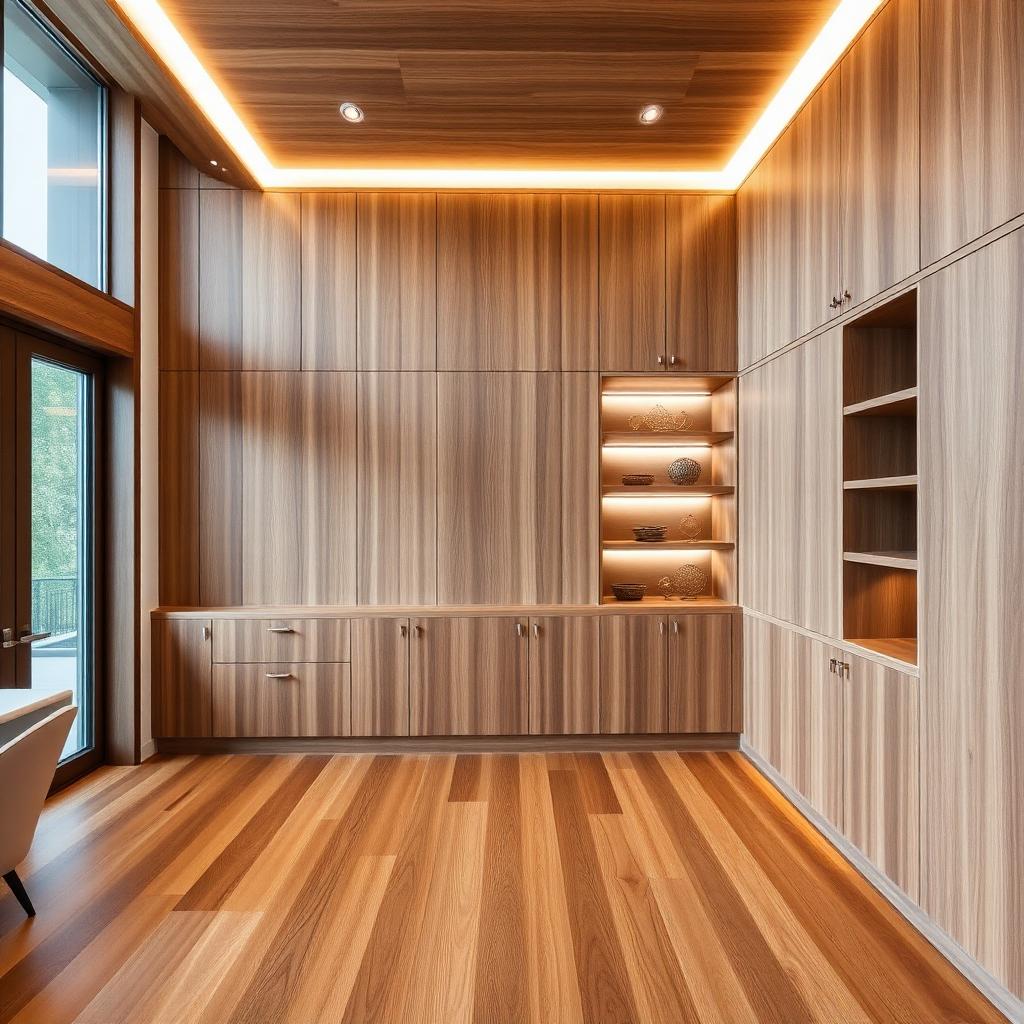
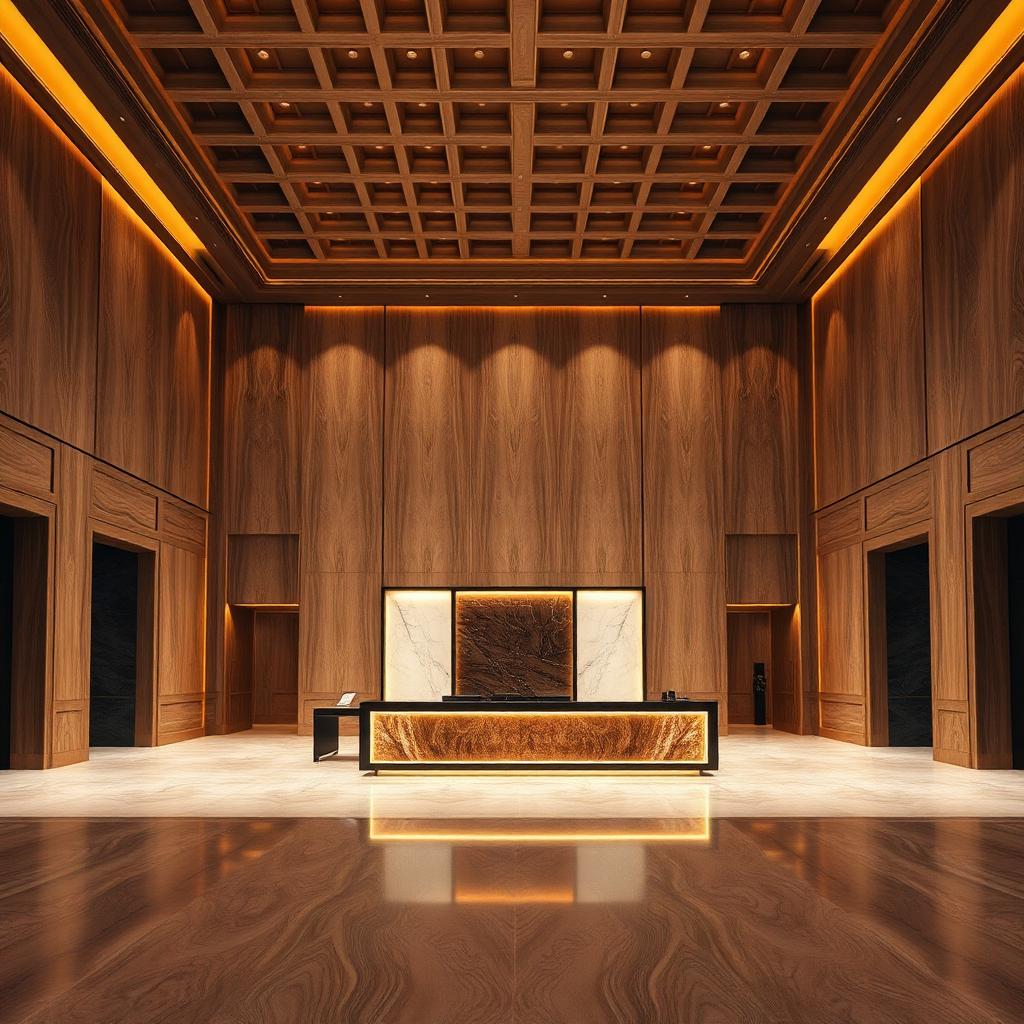
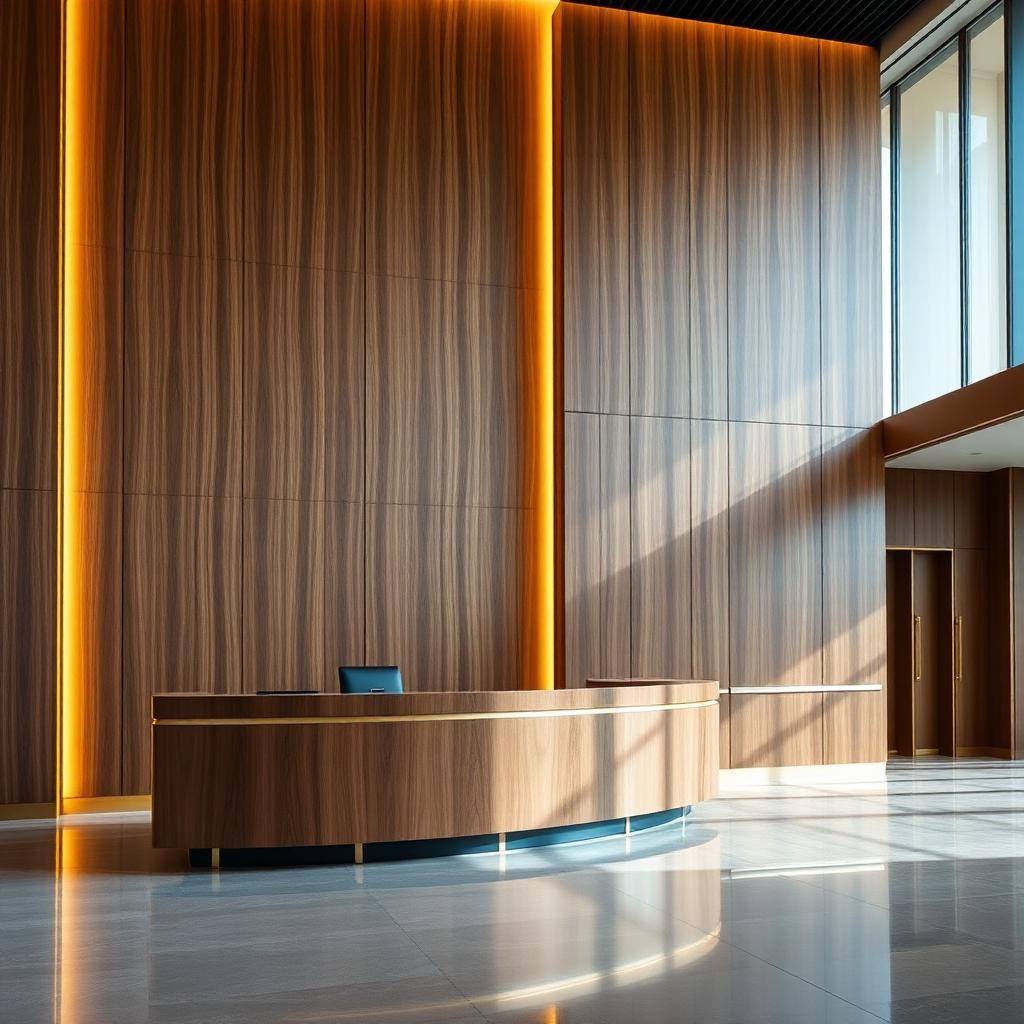
Veneer is a thin (0.5-0.6 mm) slice of real hardwood, pressed onto a stable engineered core (MDF, particleboard or plywood). It is real wood — not a print — and lets us cover large architectural surfaces (10-ft lobby walls, full-perimeter boardrooms) with a continuous, matched grain that solid lumber physically cannot deliver at that scale without moving, cupping and cracking.
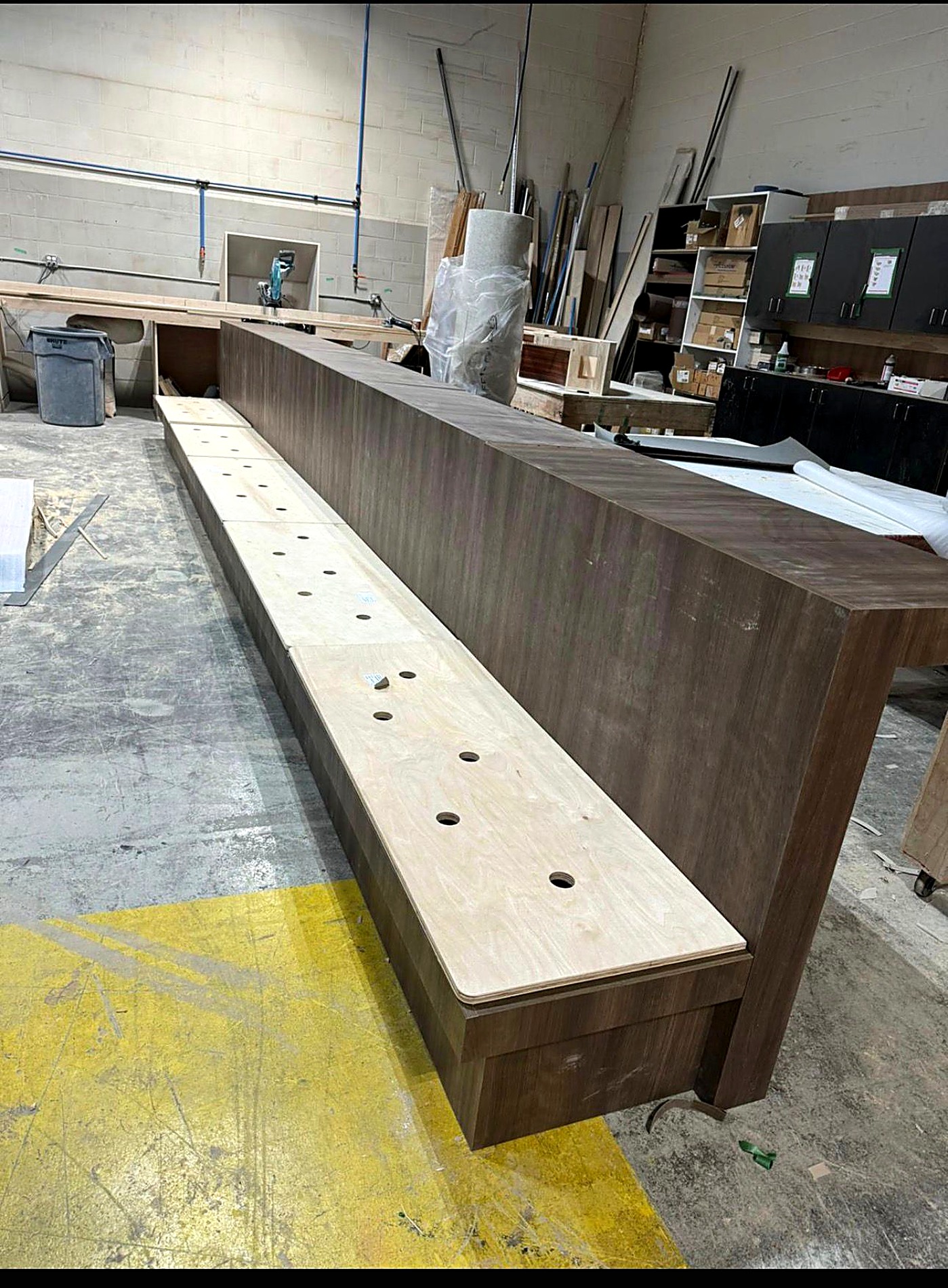
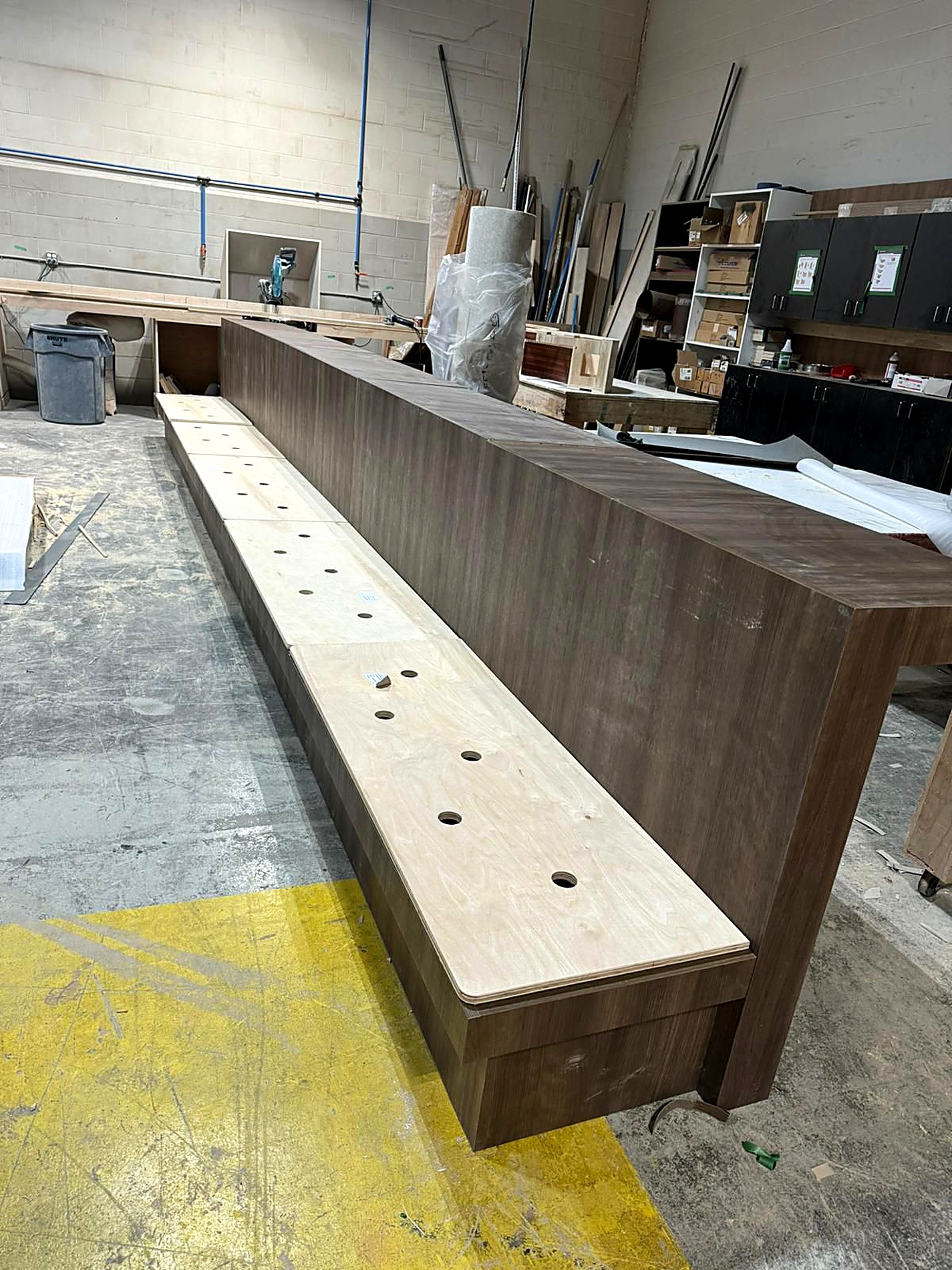
Solid hardwood is milled from the log itself. It is the right call for anything that gets touched, walked on or takes an edge load: stair treads, handrails, thick mouldings, door stiles, tabletops with exposed edges, bar tops, bench seats. Solid is heavier, moves seasonally, and is dramatically more expensive per square foot than veneer over a large area — so it belongs on the components where its structural properties matter, not on flat panel field.
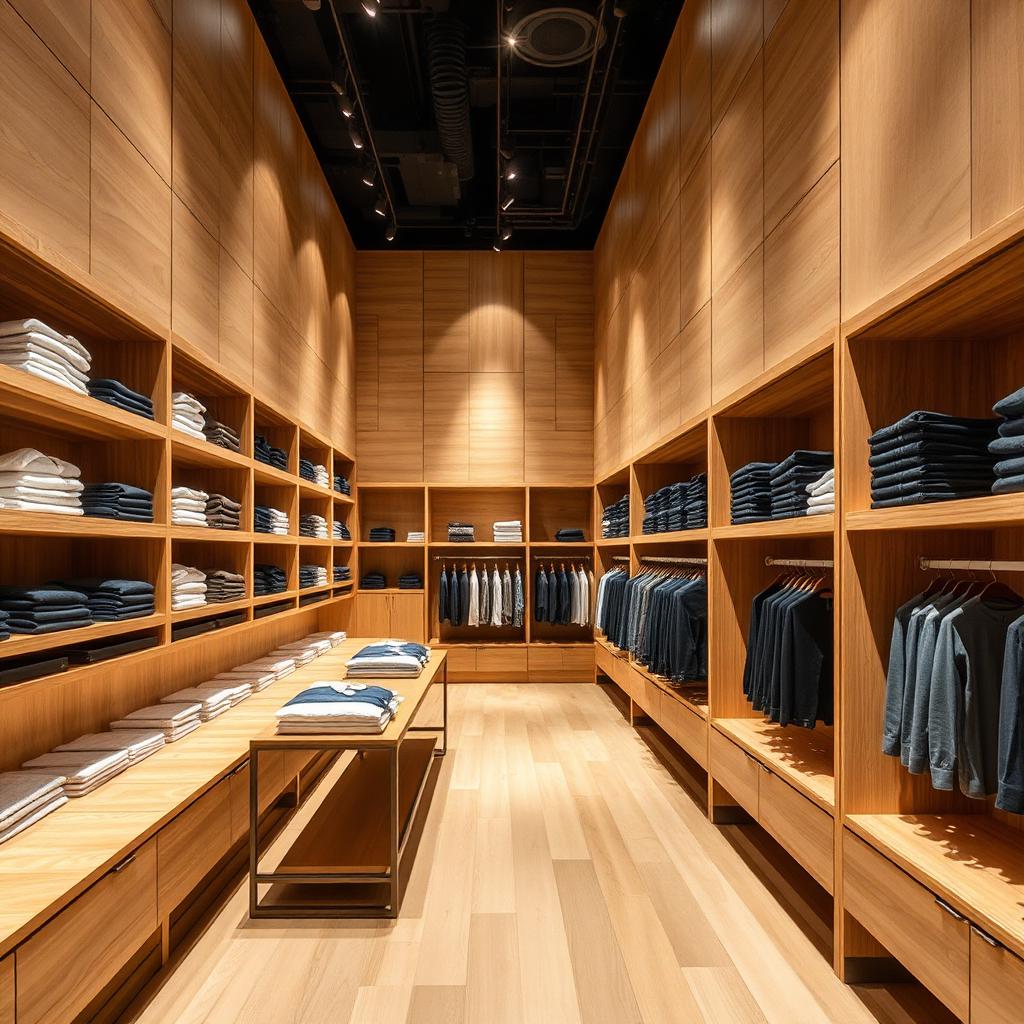
Which is more cost-effective depends entirely on the piece. For big wide panels (feature walls, ceiling panels, elevator lobbies, wardrobe fronts) veneer wins by a wide margin — solid lumber that wide would be prohibitively priced and would move. For small linear components (a handrail, a stair nosing, a 3" thick edge) solid wins — the labour to build up, veneer and edge-band a fake solid usually costs more than just milling it out of the real board.
Best for
- Lobby and elevator-cab feature walls (veneer)
- Hospitality and executive boardroom paneling (veneer)
- Ballroom and corridor wainscot (veneer)
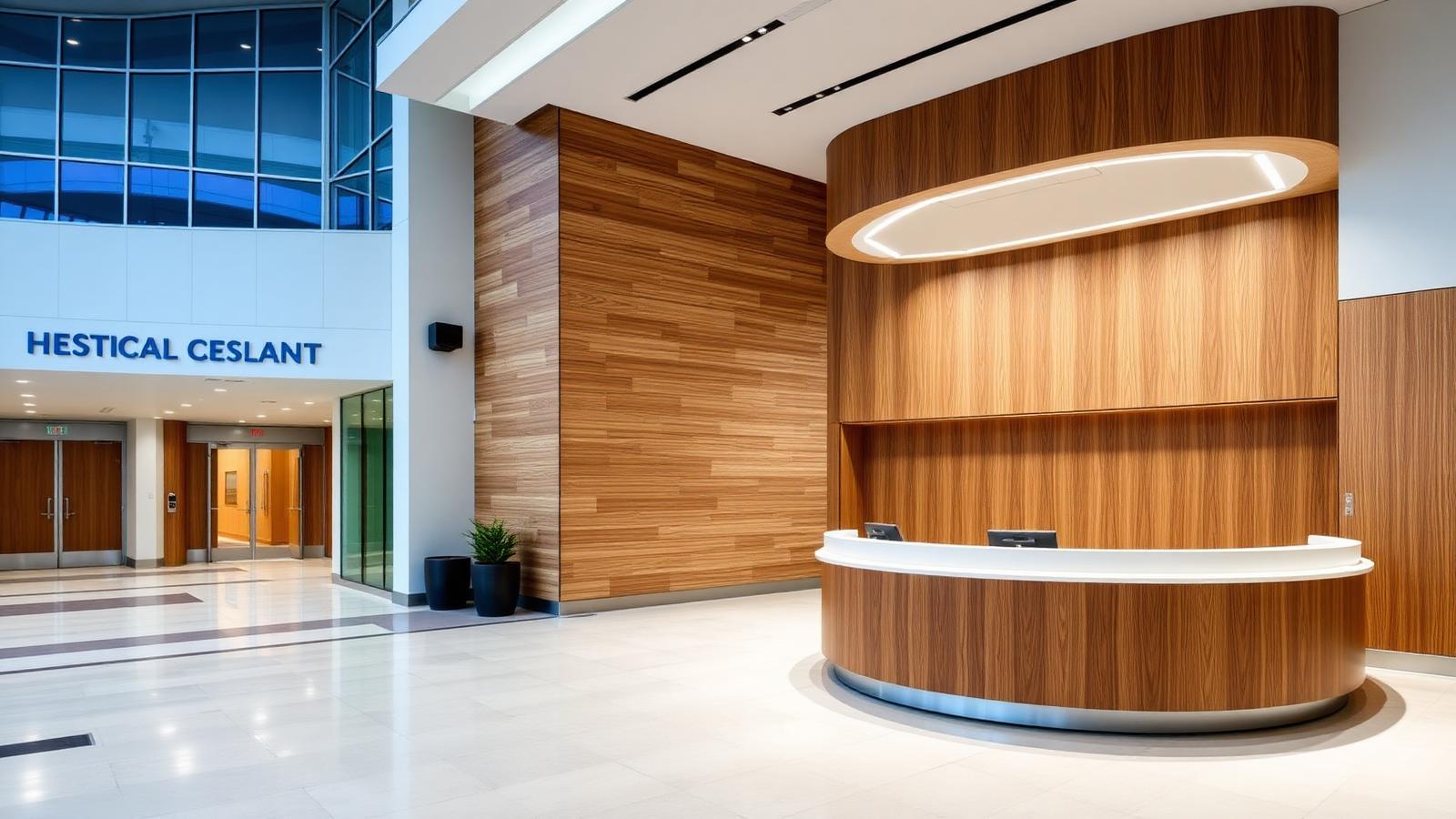
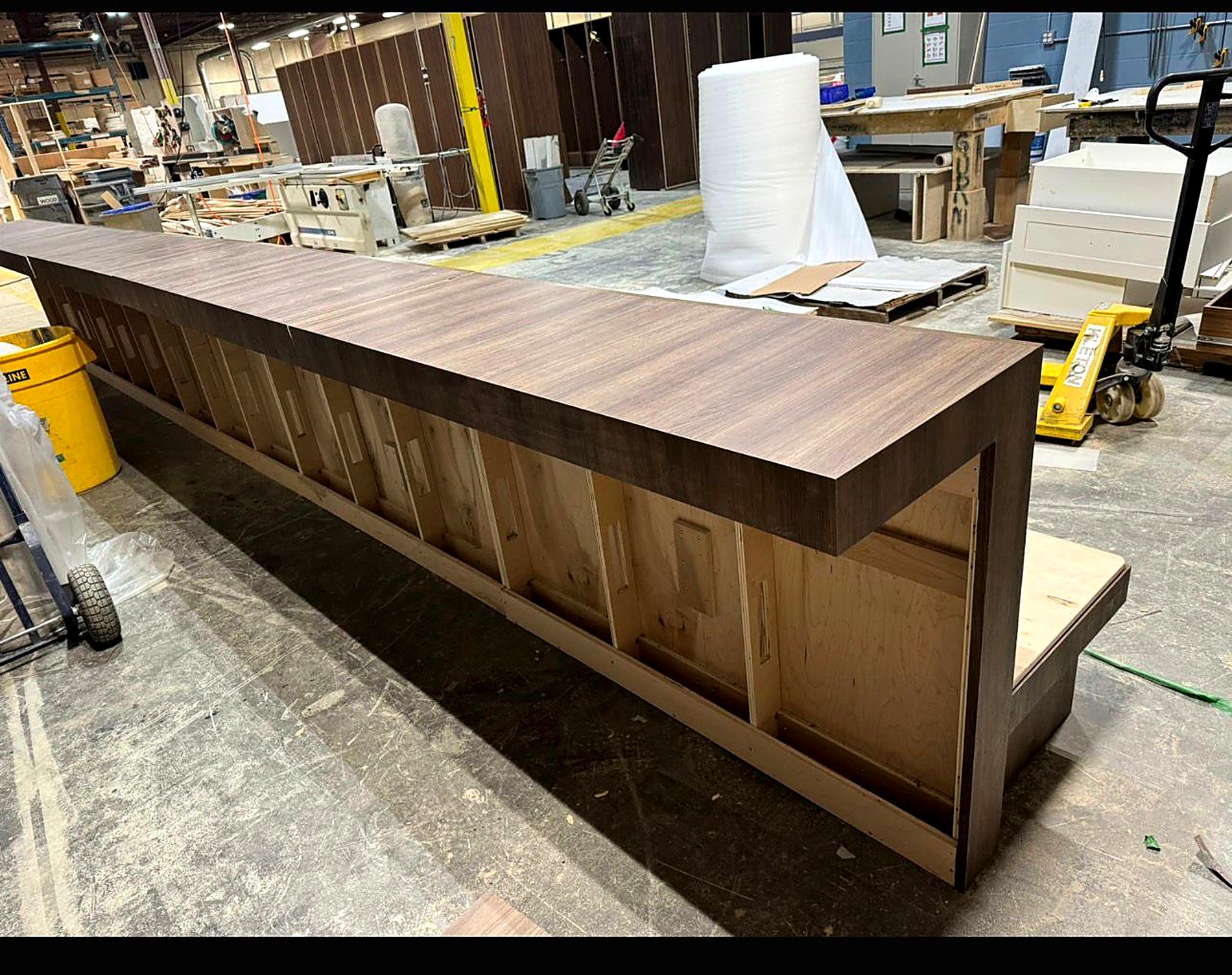
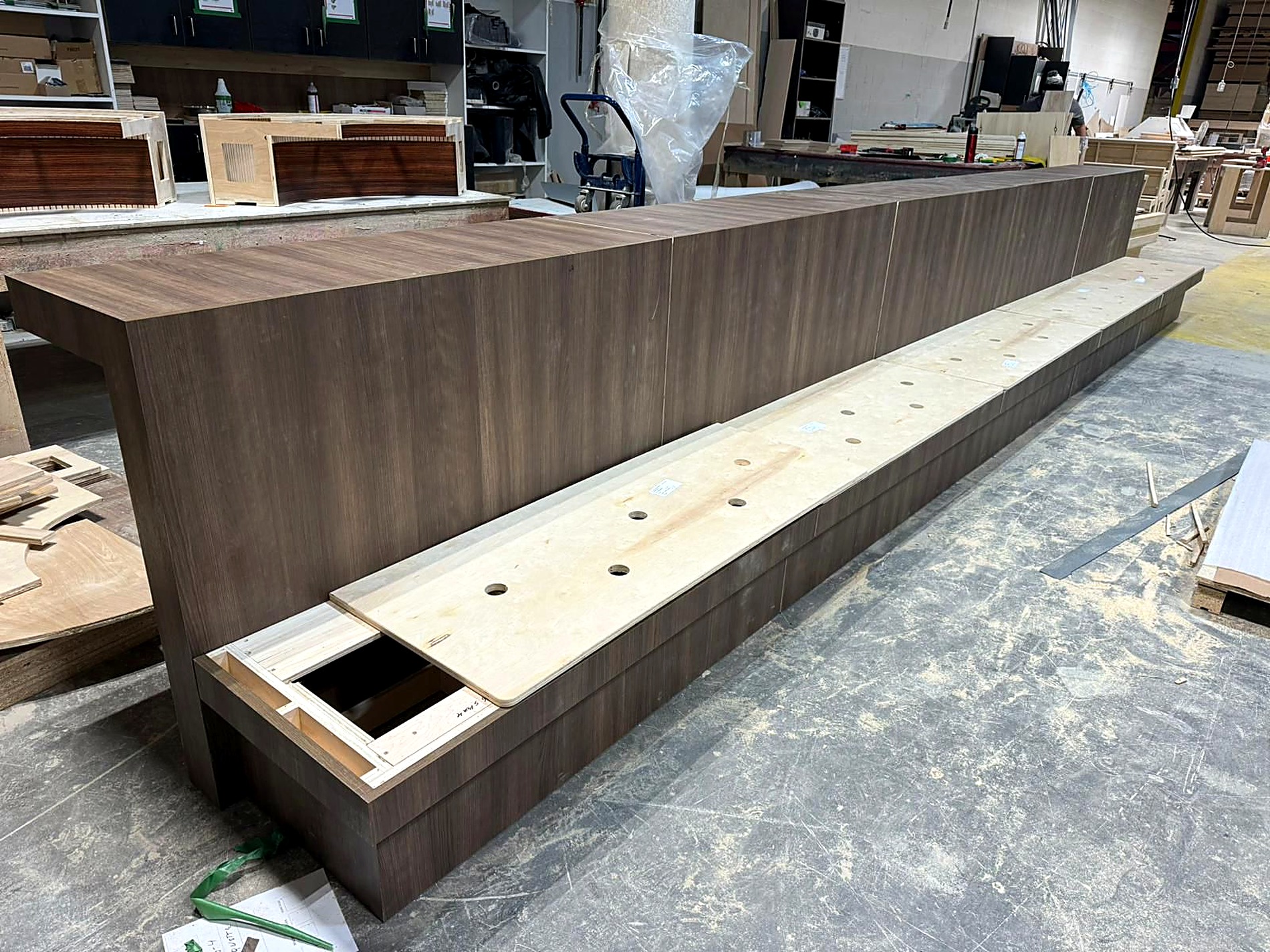
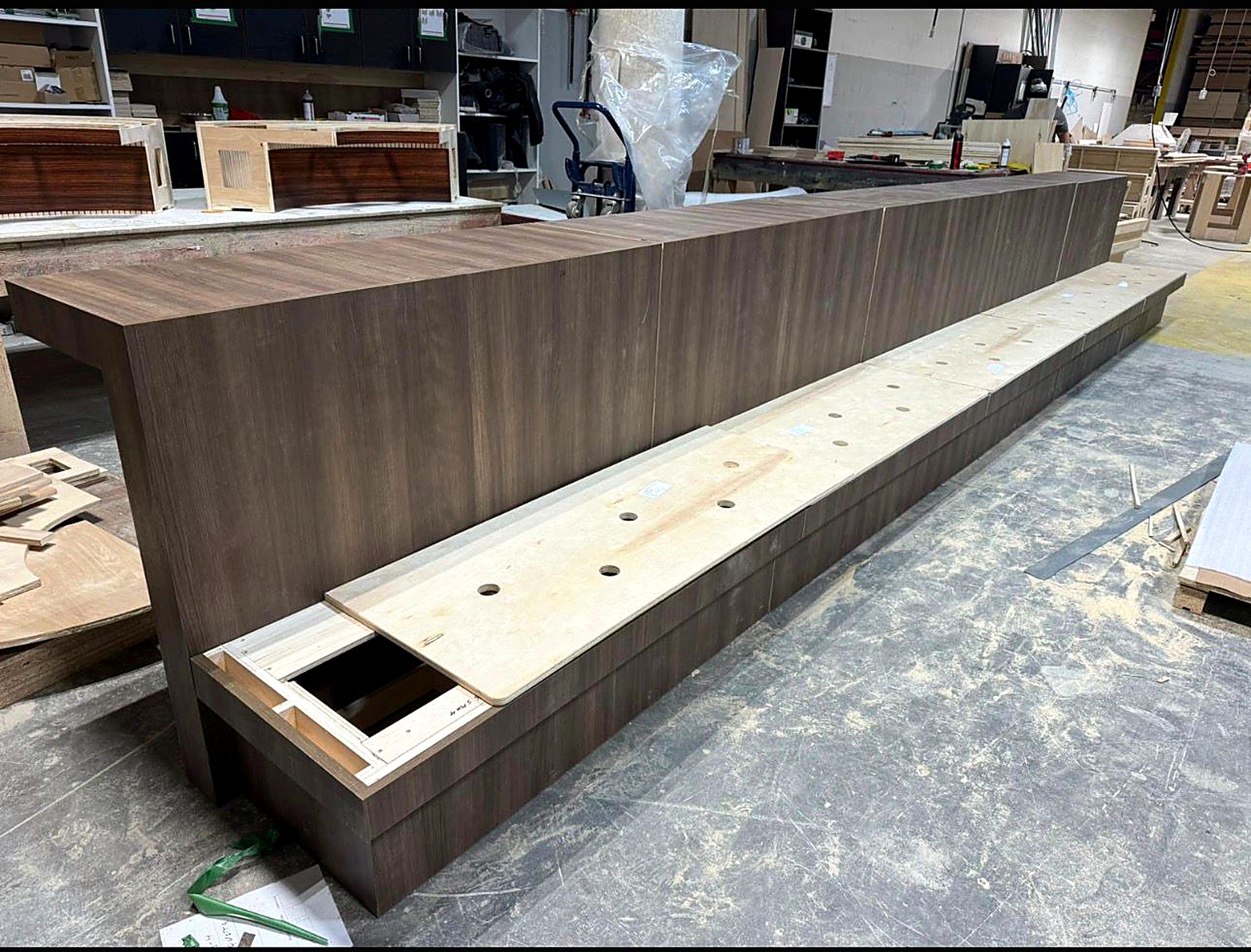
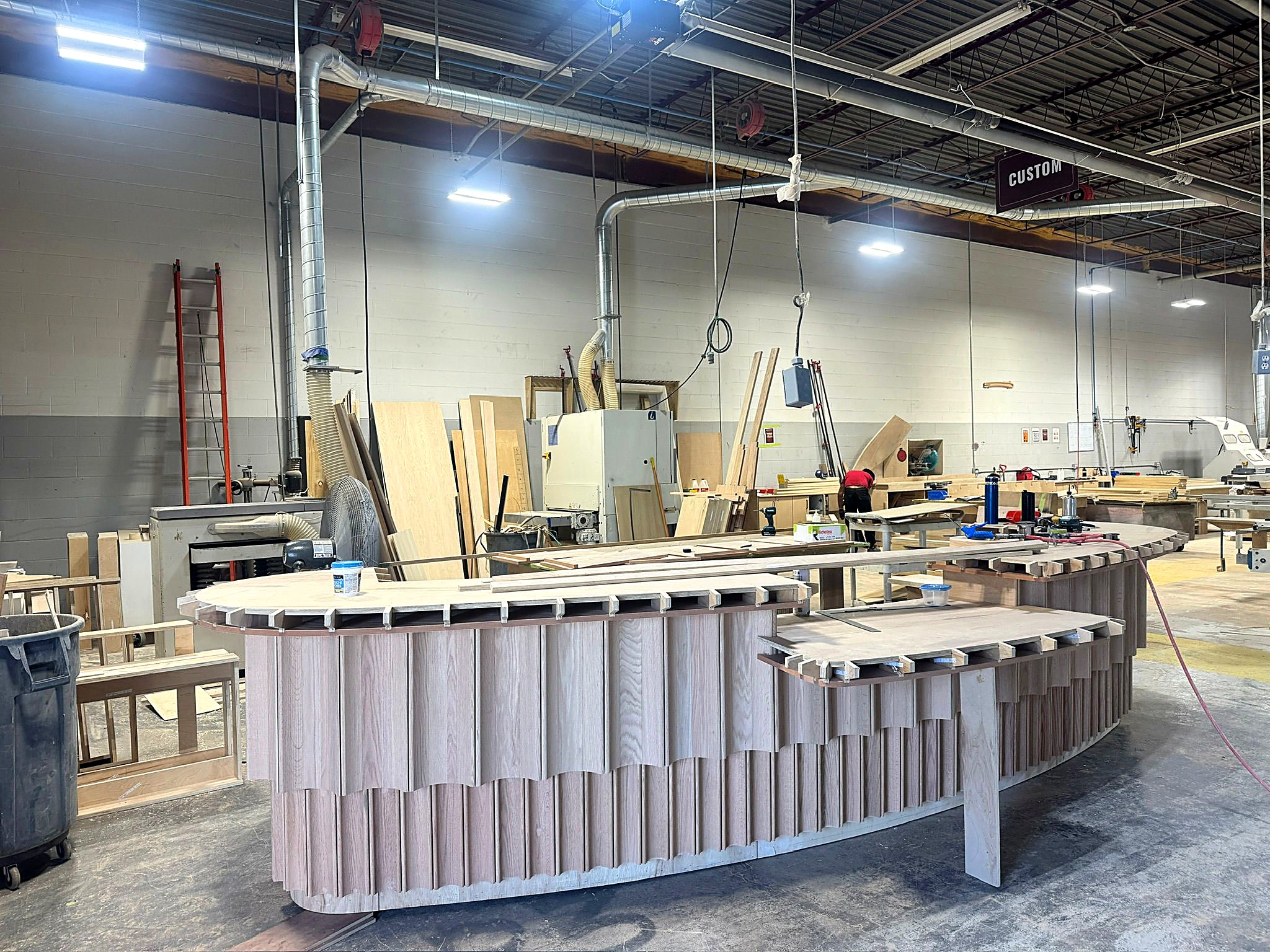
- Reception desk fronts and back-bar millwork (veneer)
- Solid hardwood stair treads, handrails and nosings
- Thick solid mouldings, door stiles and bar tops
- Any project where a continuous grain read across a wide surface matters
Materials & finishes
Materials
- Rift, quarter-cut, plain-sliced and rotary-cut veneer
- White oak, walnut, fumed oak, cherry, maple, anigre, sapele
- Sequence- and grain-matched flitches from a single log
- Reconstituted / engineered veneers where colour consistency is spec'd
- Solid North American hardwood lumber for structural components
- Matching solid-wood or PVC edge-banding to seal veneered panels
Process — award to install
01 · Estimating
Take-off from your drawings, specs and finish schedule. Line-item quote returned within one business day for most packages.
02 · Engineering & Shop Drawings
In-house team produces AWI/AWMAC-compliant shop drawings in AutoCAD, coordinated with Microvellum for direct-to-machine output.
03 · Submittals & Samples
Finish samples, hardware cut-sheets and drawing set submitted for architect/GC approval prior to release to production.
04 · CNC Fabrication
Panels nested and machined on multi-axis CNC. Solid-wood machining, edge-banding and dowel/confirmat assembly in dedicated cells.
05 · Finishing
Controlled-environment spray booths for stain, lacquer, conversion varnish, catalyzed polyurethane and low-VOC waterborne systems.
06 · QC & Pre-Ship
100 % dimensional and finish inspection against the approved shop drawings. Pre-assembled where practical for site-fit certainty.
07 · Delivery & Install Coordination
Blanket-wrapped, phased delivery coordinated with your site schedule. Installation supervision available Canada-wide.
What you receive
- ✓Flitch and cut-pattern sample boards for architect approval
- ✓Full-scale grain-match layout drawings before pressing
- ✓Book- and sequence-matched veneered panels pressed in-house
- ✓Panels edge-banded with matching veneer or solid lipping
- ✓Solid-hardwood mouldings, trim, stair parts and door components CNC-machined to profile
- ✓Panels finished in the same batch under one lot number so colour reads consistently
- ✓Installer field drawings with panel-numbering and site-verify dimensions
Quality & QA
Our commitments
- AWMAC GIS third-party inspection available on request
- ISO 9001-aligned quality management
- Dimensional tolerances per NAAWS 4.0 grade (Custom or Premium)
- Finish sheen, colour and film-build verified against approved sample
Gallery
FAQs
What actually is a wood veneer?+
A real slice of hardwood — typically 0.5 to 0.6 mm thick — cut from a log and pressed onto a stable engineered substrate. It is genuine wood, not a print or a laminate. That is why a veneered wall grain-reads exactly like solid lumber, only flatter, more stable, and available in the wide continuous panels a real architectural feature wall needs.
Veneer vs. solid hardwood — which is more cost-effective?+
It depends on the piece. For anything wide and flat (a lobby wall, a boardroom, a ceiling panel, cabinet doors) veneer over an engineered core is dramatically cheaper — solid lumber that wide costs 4-10x more per square foot and will move seasonally. For anything narrow, structural or edge-loaded (stair treads, handrails, thick mouldings, bar tops) solid is cheaper because the labour to build up and edge-band a veneered fake usually exceeds the price of the real board. We'll spec veneer or solid piece-by-piece to keep the budget honest.
Why does veneer make sense for bigger panels specifically?+
Two reasons. One, cost: a 4' x 10' rift-cut white oak veneered panel is a fraction of the price of a solid glue-up that size — and the solid glue-up would still move and check on a mechanical wall. Two, grain: veneer lets us sequence-match consecutive slices from the same flitch so grain runs continuously across a 40-ft lobby wall. Solid lumber can't do that — every board is a different tree, different colour, different pattern.
But then there's edging cost — doesn't that eat the savings?+
Edging is a real line item. Every veneered panel needs its exposed edges sealed with matching veneer or solid lipping — that means edgebander machine time, glue, labour, and a matching wood edge-band spool. On complex boxes with lots of exposed edges (open shelving, floating cabinets), the edging labour is a real cost. On flat feature-wall panels with mostly concealed edges it's negligible. We price the edging into the panel line-by-line so you see the true delivered cost before award, not after.
What are the four cut patterns and when do you use each?+
Plain-sliced (a.k.a. flat-cut) gives the cathedral/flame grain most people recognize — it's the most economical and covers the most yield per log. Quarter-cut gives a straight, tight vertical grain with occasional ray fleck (dramatic in white oak). Rift-cut gives a very linear grain with no cathedrals and no fleck — it's the most contemporary look and the most expensive because it wastes the most log. Rotary-cut peels the log continuously and gives a broad, wild grain — usually used for plywood, rarely for architectural feature walls. See image 2 in the gallery for a labelled sample board.
What's book-match vs. sequence-match?+
Book-match flips every other veneer leaf so the grain mirrors across the joint — you get that symmetric butterfly pattern (image 3). Sequence-match keeps all the leaves from one flitch stored together and installed in the order they were sliced, so grain flows continuously across a whole wall. Premium lobbies get both: book-matched within each panel, sequence-matched across the wall.
How do you fabricate a veneered panel?+
Leaves are laid out and taped into a matched face, then pressed to a stable engineered core (MDF, particleboard or plywood) in our hot press with structural PVA (image 4). Once cured, the panel is trimmed to final size on the beam saw, and every exposed edge is run through the edgebander with matching veneer or solid-wood lipping (image 5). Panels ship pre-finished under one lot number so colour reads consistently on the wall.
Where do you use solid hardwood instead of veneer?+
Anything that takes wear or an edge load: stair treads, nosings, handrails, thick door stiles, bar tops, bench seats, decorative mouldings thicker than about 5/8" (image 6). Solid is also the right call when the piece needs to be re-sanded and re-finished repeatedly over its life — you can't sand a veneer more than about twice before you break through.
What does 'fabricated and installed' cover?+
We slice, match, press, edge-band, finish and pre-fit every panel in the shop, then our own installers hang the panels on site (image 7) — mechanical French cleats or Z-clips on feature walls, biscuited and screwed on boardroom perimeter (image 8), pocket-screwed and adhered on cabinet fronts. Same crew from flitch to final install, no sub-trades in the veneer chain.
Next step
Have drawings for a veneer & hardwood fabrication package?
Send us the set and finish schedule — we'll return a line-item quote within one business day.